For budding woodturners, selecting a beginner-friendly lathe is essential to build skills without frustration. The right machine balances power, accuracy, and ease of use while keeping noise and vibration manageable. This guide highlights five beginner-oriented wood lathes and accessories available in the UK, drawing on features that help new users learn turning, shaping, and finishing with confidence.
The following table provides a quick snapshot of the chosen products, focusing on key attributes such as motor power, speed options, bed stability, and overall suitability for beginners.
| Product | Brand | Key Benefit For Beginners | Link |
|---|---|---|---|
| Winbomgo Mini Wood Lathe | Winbomgo | Low-noise, 7 speeds, all-in-one hobby kit | Amazon |
| LUMBER JACK SWL350 | LUMBER JACK | Compact size with 4 speeds and stable cast iron bed | Amazon |
| LUMBER JACK WL305 | LUMBER JACK | 500W, five-speed control, solid construction | Amazon |
| T-Mech Wood Lathe | T-Mech | Portable 1m unit with adjustable speeds for varied projects | Amazon |
| FesmTek Mini Lathe | FesmTek | Easy DIY setup, 7-speed regulation, compact and versatile | Amazon |
Winbomgo Mini Wood Lathe For Beginners

The Winbomgo Mini Wood Lathe is designed for entry-level woodworkers seeking a compact, all-in-one setup. It combines turning, milling, cutting, and polishing functions within a single unit, reducing the need for multiple machines. Its 100W high-torque motor provides adequate power for small decorative items and practice pieces, while seven adjustable speeds (3500 rpm to 10000 rpm) enable a wide range of wood types and finishes. The included multifunctional fixed chuck and wear-resistant tools support routine tasks such as turning, grinding, and polishing. For beginners, the machine’s instructional guide and approachable setup help shorten the learning curve, making it suitable for hobbyists exploring basic turning techniques.
Key considerations for beginners: ensure proper work-holding and safety equipment, start at lower speeds, and practice with softer woods before progressing to denser materials. The compact size minimizes space requirements, which is beneficial for home workshops. While adequate for learning, users should be mindful of tool wear over time and consider upgrading to larger tools as skills grow.
SIIIXS Carbide Lathe Tools Kit

Note: This entry focuses on tools that complement beginner lathes. The SIIIXS 6-piece carbide lathe tool kit includes a swan neck hollower, rougher, and finisher with beech handles. While the tools are designed for efficient material removal and finishing, their stainless steel cutters resist rust, and the beech handles offer a comfortable, non-slip grip. The square tool bar design stabilizes movement on the tool rest, reducing chatter and improving control for newer users. For beginners, pairing quality tools with a suitable lathe can accelerate skill development and improve finish quality on practice projects.
Lumber Jack SWL350 Wood Lathe

The SWL350 from Lumber Jack is a compact starter lathe designed with beginner use in mind. Its 370W induction motor delivers steady, quiet performance with reduced vibration, helping new turners achieve smoother finishes. The four-speed control range accommodates typical beginner projects and wood varieties, from soft to moderately dense. A stable bench setup is assisted by a solid frame, allowing learners to focus on technique rather than constantly adjusting equipment. While it suits hobbyists exploring essential turning skills, more advanced projects may require higher power, speed range, and bed length as confidence grows.
Lumber Jack WL305 Mini Wood Lathe

The WL305 is a compact, yet capable, 550W bench lathe aimed at beginners and hobbyists. It offers five speed settings (430–2800 RPM), which helps learners adapt to different turning tasks, from simple spindle turning to more controlled shaping. The heavy-duty cast iron bed minimizes vibrations and enhances stability during operation, contributing to safer and more predictable results for novices. This model suits workshops with limited space where a larger, industrial-grade lathe would be impractical. It’s a solid step-up from ultra-compact toy lathes while staying approachable for beginners.
Wood Lathe 1m By T-Mech
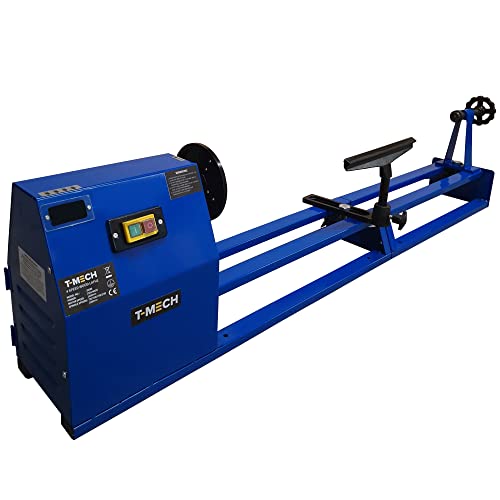
The T-Mech 1m wood lathe is a longer, more portable option that stands out for its adjustable speed settings and modular design. With a 400W motor and speeds ranging from 810 to 2480 RPM, it offers flexibility for a variety of beginner to intermediate projects. The unit’s length enables a greater turning capacity, and it splits into two parts for easier transport and storage. This model suits beginners who want a stable, versatile lathe that can handle longer spindles and more ambitious practice pieces while remaining manageable for a home workshop.
Lumber Jack VSL305 Variable Speed Lathe

The VSL305 by Lumber Jack combines a powerful 550W motor with full electronic variable speed control. With three speed ranges and a digital display, learners can dial in precise speeds for different woods and techniques. Anti-vibration feet further reduce movement during turning, enhancing safety and finish quality for beginners. This model is well-suited to learners who anticipate progressing to more complex projects, as the digital readout supports consistent results and easier reproducibility across sessions.
Buying Guide: Key Considerations For Beginners
- Power and speed range: Beginners benefit from a lathe with at least 350–550W and multiple speed settings. A broad RPM range accommodates soft woods for practice and denser woods for more challenging work.
- Bed stability and construction: A solid cast-iron bed reduces vibrations, improving accuracy and user safety. Stability matters more as projects lengthen or tool cuts deepen.
- Size and capacity: Choose a lathe with turning capacity that matches your projects. Start with smaller spindle lengths and diameters, then expand to larger pieces as skills grow.
- Safety features: Look for guards, clear instruction manuals, and stable tailstock and tool rests. Proper training and PPE (eye protection, dust mask) are essential for beginners.
- Accessories and tooling: A beginner-friendly package often includes basic chisels, chucks, and instructional guides. Investing in quality bits and a sturdy chuck can improve outcomes early on.
- Upgrade trajectory: Consider whether the lathe allows add-ons or upgraded components (motor, bed length, tool rest) so you can grow with the machine.
- Space and noise: If space is limited, opt for a compact model with low noise output. A quieter lathe improves the learning environment and reduces fatigue during long practice sessions.
- Maintenance and support: Look for models with accessible spare parts and local UK support to ensure long-term usability and easy repairs.
For newcomers, balancing price with capability is key. Start with a compact model that offers a meaningful range of speeds, solid stability, and basic accessories. As confidence builds, you can explore more ambitious projects and upgrade components accordingly.