Porcelain tile demands a blade that can deliver clean, precise cuts with minimal chipping. This guide highlights five top wet/dry blades suited for porcelain, drawing on popular models from reputable brands. Each product section explains what makes the blade ideal for porcelain and what to consider when choosing yours. A concise buying guide at the end helps you compare performance, durability, and compatibility across common tile saws in the United Kingdom market.
| Product | Brand | Size | Best For |
|---|---|---|---|
| RUBI CPC Diamond Blade | RUBI | 180 mm | Fine porcelain and mitre cuts |
| EZARC 115mm Diamond Discs | EZARC | 115 mm | Porcelain, ceramic, granite, marble |
| BGTEC Diamond Tile Blade | BGTEC | 180 mm | Porcelain, ceramic, hard materials |
| GoYonder 7″ Diamond Tile Blade | GoYonder | 180 mm | Porcelain and ceramic cutting |
| DEWALT Porcelain Diamond Blade | DEWALT | 4.5 inches | Porcelain tile cutting |
RUBI CPC For Fine Porcelain

The RUBI CPC diamond blade integrates a multi-metal rim and a high-quality fine diamond grain to enable efficient wet cutting with minimal chipping. Its design supports mitre joints in porcelain tiles, including very hard varieties under 25 mm thick. This blade is intended for wet cutting, with a specific recommendation for mitre work. Users can expect smooth, precise cuts on demanding porcelain surfaces, aided by a device-driven damp environment that reduces heat-related wear.
EZARC 115mm For Porcelain

EZARC 115mm diamond cutting discs are designed for porcelain, ceramic, granite, and marble, offering long-lasting performance for wet or dry cutting. The blades feature a thin X-teeth turbo rim to deliver clean cuts while reducing chipping and friction. Suitable for most tile saws and angle grinders with a 22.23 mm arbor, these discs provide reliable efficiency for a range of tile installation projects.
BGTEC 180mm For Porcelain
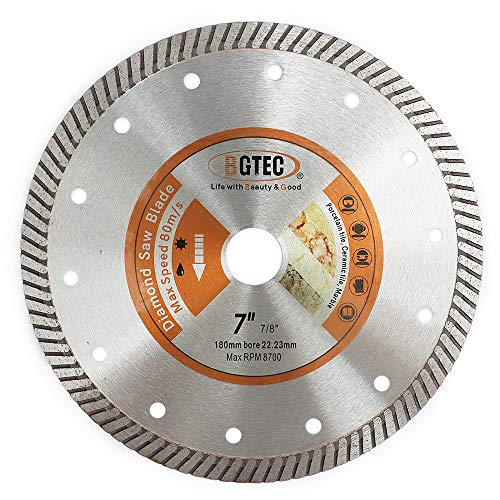
The BGTEC 180mm diamond blade is a super-thin turbo rim blade designed for dry or wet cutting. With a 22.23 mm arbor, it targets porcelain, tile ceramic, and hard materials such as granite and marble. The blade emphasises a clean cutting approach and is tuned for efficient performance in high-load tile-cutting tasks, helping to minimize heat buildup and material loss during long cuts.
DEWALT Porcelain Blade

DEWALT porcelain blades are built for extended life with a robust diamond matrix. Featuring laser-cut expansion slots to reduce blade warping from heat, these XP2 and XP3 variants promise longer life relative to standard blades. They are optimized for cutting porcelain tiles and related hard materials, delivering dependable performance across different tile thicknesses and saw types.
GoYonder 7″ Wet/Dry Blade

This GoYonder 7-inch blade is built for both wet and dry cutting with a 10 mm diamond rim and a thin 1.6 mm profile. Its turbo rim design enhances cutting efficiency and reduces chipping in porcelain and ceramic tiles. It is designed to fit common tile cutters and angle grinders with standard arbors, offering versatility for different job sites and installer preferences.
Buying Guide: Porcelain Tile Wet Saw Blade Choices
- Blade thickness and rim design: Thinner blades reduce material loss and kerf width but must remain robust to avoid wandering. Turbo rims help maintain cutting speed while minimizing heat and chipping.
- Material compatibility: For porcelain, look for blades specified for porcelain, ceramic, and hard materials. Wet cutting is often preferred to control heat and prolong blade life.
- Diameter and arbor compatibility: Common UK tools use 22.23 mm arbor sizing. Verify bore size and arbor compatibility with your saw before purchasing.
- Dry vs. wet cutting: Some blades are marketed as universal (dry or wet). If you frequently cut damp or absorbent porcelain, prioritize wet-cutting blades or blades explicitly rated for both conditions.
- Blade life and heat management: Blades rated for long life often feature advanced diamond matrices and laser-cut expansion slots to reduce warping. For large projects, durability and heat management are crucial.
- Edge finish and chips: For porcelain, achieving clean mitre and edge cuts is essential. Choose blades with fine diamond grains and X-teeth or turbo segments to reduce chipping around corners.
- Tool compatibility: Confirm the blade fits common UK tile saws and handheld grinders. Packaged sets (like 3-piece assortments) can offer good value for varied tile tasks.
- Brand reputation and warranties: Reputable brands with documented blade performance provide confidence for professional tiling work and recurring installs.
When selecting a blade, weigh the balance between cut quality, blade life, and the type of porcelain you are working with. For mitre joints and precise edge work, blades like RUBI CPC are specifically praised for their performance with hard porcelain under 25 mm. For general porcelain tile cutting, universal blades such as EZARC and BGTEC offer reliable results with broad compatibility. Larger diameter blades from DEWALT and GoYonder provide efficient performance for substantial tiles and commercial-style layouts. Always follow the tile saw manufacturer’s guidelines for blade speed, cooling methods, and safety.