Choosing a reliable water leak detector helps protect homes across the UK from costly flooding. The following guide reviews five top-rated devices, highlighting real-time alerts, battery life, installation flexibility, and app support. Whether you want a Wi‑Fi connected system or a standalone alarm with loud alerts, these picks cover kitchens, bathrooms, basements, and utility areas. Use the Buying Guide to compare features and make an informed choice that fits your property and monitoring needs.
Summary of chosen products
| Product | Connectivity | Key Features |
|---|---|---|
| X-Sense Wi-Fi Water Sensor with SBS50 Base Station | Wi-Fi | 2 top sensors, 4 bottom sensors, app controls, 100 dB alarm |
| Tapo T300 Smart Water Leak Detector | Wi-Fi | 6 probes, 90 dB alarm, IP67 waterproof |
| X-Sense Wi-Fi Water Leak Detector SWS54 | Wi-Fi | 3 detectors, 110 dB alarm, broad range |
| SwitchBot WiFi Water Leak Detector | Wi‑Fi | 4 probes, 100 dB alerts, no hub required |
| TECKNET Water Leak Detector | Standalone (no Wi‑Fi) | 120 dB alarm, 2 top + 4 bottom probes, IP66 |
X-Sense Wi‑Fi Water Sensor With Base Station

The X-Sense SWS0A41 kit combines a water sensor with a SBS50 base station, offering both local alarm and remote notifications. The unit features top and bottom probes, enabling detection of shallow drips as well as direct water contact. When a leak is detected, the sensor flashes a red light and the base station emits up to 100 dB to alert occupants. The accompanying app provides real-time alerts, alarm volume controls, and historical data. Battery status and sharing options add convenience for households with multiple caregivers or tenants.
Tapo T300 Smart Water Leak Detector

The Tapo T300 offers a ready-to-use leak alert system with six probes across the top and bottom, ensuring responsive detection of drips and leaks from multiple angles. An audible alarm reaches up to 90 dB, easily heard in most homes, with one-touch mute for quiet periods. Its IP67 waterproof rating protects the device itself in damp locations, making it suitable for kitchens, bathrooms, and utility areas. Installation is straightforward, and the product supports real-time notifications through the Tapo ecosystem.
X-Sense Wi‑Fi Water Leak Detector SWS54

This model provides immediate vulnerability awareness with three detectors and a base station, delivering real-time push alerts and up to 110 dB sound output. Its dual-probe strategy targets high-risk zones in kitchens, basements, and bathrooms, while sharing features allow family members to monitor status remotely. High sensitivity detects water at very low levels, enabling earlier intervention to minimise damage.
SwitchBot WiFi Water Leak Detector
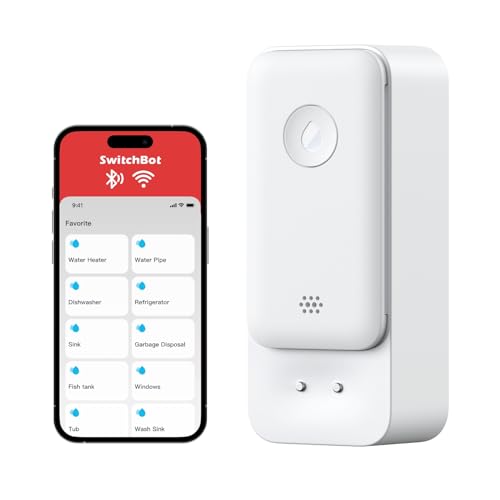
SwitchBot offers a no-hub-needed setup that connects directly to 2.4 GHz Wi‑Fi. It features four probes for top and bottom sensing, with automatic warnings up to 100 dB and companion app alerts. A 1-meter extended probe supports detecting water levels in additional spaces such as under appliances or in surgical bays of basements. The device is compact, making it suitable for tight spaces near washing machines, dishwashers, and sinks.
TECKNET Water Leak Detector

The TECKNET leak detector is a compact, wireless option with no reliance on Wi‑Fi. It uses dual top probes and four bottom probes to detect leaks and moisture across surfaces and floors. The alarm can reach up to 120 dB, and its waterproof rating (IP66) protects against damp environments. Notably, TECKNET prioritises a portable design and silent operation options, helpful in bedrooms or quiet zones where a loud alert might be disruptive.
Buying Guide
Key considerations when selecting a water leak detector include connectivity, alerting scope, depth sensitivity, and placement flexibility. Wi‑Fi-enabled models provide remote monitoring and app-based control, but rely on internet access. Standalone detectors without connectivity may offer simpler operation and lower maintenance, suitable for areas with weak Wi‑Fi in outbuildings or basements.
Probe configuration is important: devices with multiple top and bottom probes detect drips and rising water more quickly, while higher dB alarms improve audibility in large homes. IP ratings matter for damp environments—IP67 offers robust water immersion protection, whereas IP66 provides solid splash resistance. Consider battery life, replaceable vs. rechargeable power, and whether the unit supports sharing device access with family members or housemates.
Placement strategy should target high-risk zones: washing machines, dishwashers, water heaters, under sinks, and basements. If you have a smart home, ensure compatibility with your existing hubs or ecosystems; some sensors pair with broader alarm systems (such as home security families) or operate as standalone devices. Finally, evaluate the total cost of ownership including optional subscriptions for enhanced app features or professional monitoring.
Overall, the right water leak detector balances early warning capability, ease of installation, and reliable alerts. For households needing remote oversight, Wi‑Fi models with strong app support and high-sensitivity probes offer the quickest path to rapid response and damage prevention. For minimalist setups or spaces with spotty Wi‑Fi, battery-powered, high-volume standalone alerts provide a practical alternative.