Non-contact voltage tester pens are essential tools for quick safety checks in UK homes and workplaces. The following selected models combine reliable NCV detection, clear alarms, and practical features for electricians and DIY enthusiasts alike. Below you’ll find five strong options, each with key capabilities to help you choose the right voltage tester pen for everyday electrical tasks.
| Product | Brand | Voltage Range | Key Feature | Why It’s Useful |
|---|---|---|---|---|
| Fluke 1AC II VoltAlert | Fluke | AC 200–1000V | Non-Contact ACV detector | Industry-grade reliability for quick checks |
| VENLAB VD200 | VENLAB | 12–1000V / 48–1000V | Dual range with audible/visual alarms | Flexible sensitivity for various environments |
| KAIWEETS VT100 | KAIWEETS | 50–1000V | NCV indicator with audible and LED alerts | Compact and responsive for frequent use |
| Neoteck Voltage Tester | Neoteck | 12–1000V / 48–1000V | LCD display with dual-range | Clear live/neutral indication |
| Proster Voltage Tester | Proster | 12–1000V / 48–1000V | Adjustable sensitivity with dual range | Good value with multiple alarms |
Note: All models listed are non-contact testers designed for AC voltage detection. Readings are indicative for safety checks and should be complemented with proper wiring measurements when required.
Fluke 1AC II VoltAlert Non-Contact Tester

The Fluke 1AC II VoltAlert provides a reliable non-contact voltage detection in the 200–1000V AC range. It features the classic Fluke build quality and delivers a quick visual and audible alert when voltage is present. The compact pen design makes it easy to carry in a tool bag. This model is widely trusted by professionals for routine safety checks in electrical installations, outlets, and switches. The device is designed to help identify live wires without contact, reducing the risk of shock during preliminary checks.
Key features include a bright indicator and a consistent alarm system, with the ability to detect voltage quickly in challenging environments. It’s suitable for both pros and DIY enthusiasts who need dependable verification of live circuits before proceeding with any work. While the device focuses on AC voltage, its simplicity makes it a staple in most electrical toolkits for fast safety screening.
VENLAB VD200 Dual-Range Voltage Tester

The VENLAB VD200 offers non-contact voltage testing with two detection ranges: 12–1000V AC and 48–1000V AC. It uses an NCV inductive probe to identify live or neutral wiring by proximity, with audible beeps and a flashing light that intensify as voltage increases. A practical feature is its adjustable sensitivity via H/L, helping users tailor detection for devices like doorbells, thermostats, and printers. The device also includes a flashlight for low-light environments and a buzzer alarm, supporting both visual and audible cues for safer work conditions.
Users benefit from its dual-range operation, which broadens applicability while maintaining simplicity. The indicator lights—red for higher voltage and orange for lower levels—assist in quickly assessing risk levels. The VD200 is well-suited for electricians, property maintenance staff, and homeowners undertaking electrical tasks where quick live-wire confirmation is essential before starting any work.
KAIWEETS VT100 Non-Contact Voltage Tester

The KAIWEETS VT100 is a versatile voltage tester with a 50–1000V AC range. It uses an NCV inductive probe for quick, contact-free voltage detection and provides multipoint indicators—red glow, beeping, and visual bars—to confirm live wires. The tool includes dual-range operation and adjustable sensitivity, allowing users to fine-tune testing for low-voltage applications such as doorbells and thermostats. A helpful LED indicator informs users of voltage presence, and the device is designed for easy handling by both professionals and homeowners.
Its compact form factor makes it convenient to carry on-site, and the audible alerts are calibrated to deliver clear warnings without overwhelming noise in busy environments. For those performing routine safety checks or wiring installations, this tester provides a reliable balance of simplicity and functional depth, with safety-first indicators that align with UK electrical standards for non-contact testing.
Neoteck Non-Contact Voltage Tester

The Neoteck voltage tester features a dual-range 12–1000V and 48–1000V capability with a clear LCD display. It uses a non-contact NCV probe to detect AC voltage and indicates live vs. null wires through color-coded feedback on the screen. The device is CE CAT III 600V certified and designed for household and DIY use, offering a red warning signal when voltage exceeds safe levels and green for null/low voltage states. It emphasizes safety through an audible alert in addition to visual cues, making it a practical choice for identifying potential hazards before work begins.
Designed for use by homeowners and hobbyists, the Neoteck tester aims to minimize risk by providing quick, informative readings without direct contact. The LCD display adds a layer of clarity for confirming voltage levels in more complex electrical configurations, and the dual-range function supports both standard and more sensitive low-voltage testing scenarios.
Labgear 2-in-1 Voltage Detector with LED Torch
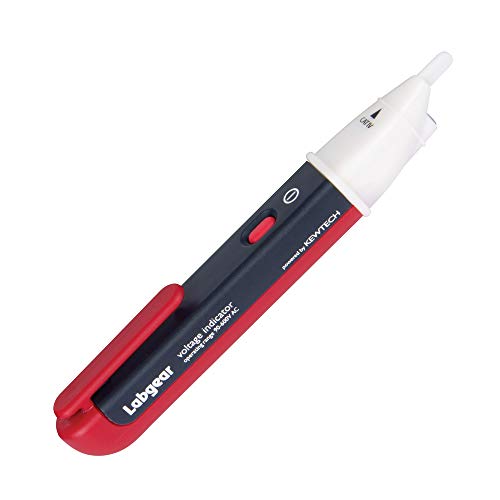
The Labgear voltage detector combines a pen-style tester with an LED torch and audible tone for a dual-feedback approach. It detects AC voltages from 90V to 600V with improved sensitivity, enabling quick checks at outlets, switches, and circuit breakers. The device identifies breaks in conductors and can help locate a blown fuse while testing live circuits. The audible tone adds a reliability layer for technicians working in loud environments or when focusing attention away from a visual display. The ergonomic design supports extended use, providing practical value in both professional and home settings.
With its dual feedback (sound and light) and safety-focused range, this tester is suitable for routine inspections, electrical maintenance, and troubleshooting. The tool’s ability to trace breaks along a run makes it a useful addition to a basic toolkit for daily electrical diagnostics.
Buying Guide: Key Considerations For Choosing A Voltage Tester Pen
- Voltage Range And Sensitivity: Look for testers that cover typical UK domestic voltages (roughly 230V AC). Dual-range models offer flexibility for both standard and low-voltage applications, such as LED lighting and doorbell circuits.
- Inductive NCV Probe: Ensure the tester uses a non-contact inductive probe for safe detection near terminals, outlets, and fixtures. A bright indicator and audible alarm help when working in noise or dim lighting.
- Alarms And Indicators: Choose between visual LEDs, audible beeps, or a combination. Some models display voltage levels on an LCD or bar graph, which can aid in identifying proximity to live wires.
- Safety Certification: In the UK, select testers with appropriate safety ratings (e.g., CAT III/IV where applicable) to align with common electrical installations and ensure user protection.
- Build And Ergonomics: A compact, pen-style design improves portability. Ergonomic grip and pocket clip support frequent handling during tasks.
- Additional Features: Flashlights, breakpoint detection, and dual feedback (sound + light) can enhance usability in challenging environments or for longer jobs.
- Warranty And Support: Reputable brands such as Fluke tend to offer longer warranties and better customer support, which can be a consideration for professional use.
When selecting a voltage tester pen, assess your typical work environment and the variety of devices you test. For professional electricians, a high-reliability model with clear alarms and strong safety certifications is recommended. For homeowners performing occasional checks, a mid-range tester with dual-range sensitivity and straightforward indicators offers solid value. Always verify that a tester is suitable for non-contact use and that it complies with relevant safety standards before relying on it for critical tasks.