Parents seeking a calm start to the day can rely on a toddler wake up clock to teach time concepts and improve sleep. These clocks use colors, icons, and sound to signal when it’s time to wake up, nap, or wind down. Below is a curated selection of popular models that help children understand daily routines while offering night lights and sound options for comfort. Read on to compare features and choose the best fit for your family.
| Product | Brand | Key Feature |
|---|---|---|
| iHoo Ok to Wake Kids Alarm Clock | iHoo | Colorful time cues with wake/sleep emojis |
| ANNNGUL Sun & Moon Sleep Trainer Clock | ANNNGUL | Visual day/night cues with a sun and moon display |
| DINOTIME Ok to Wake Dinosaur Clock (Green) | DINOTIME | Friendly Dino design with night light and sounds |
| H-chin Kids Alarm Clock | H-chin | Colorful indicators plus adjustable night light |
| ANNNGUL Ok to Wake Clock With Night Lights | ANNNGUL | Bright night lights and intuitive controls |
Choosing the right clock depends on how your child responds to visuals, sounds, and light. This guide highlights practical considerations—ease of use, durability, and how each model supports consistent wake times—so you can identify the best option for your child and family rhythm.
iHoo Wake Up Clock

The iHoo clock uses a friendly color and emoji system to teach children when it is time to wake up or wind down. Green with a smile indicates wake time, while red with a sleep emoji signals bedtime. This visual approach aligns with early time concepts, supporting toddlers and young children in recognising daily patterns. A dual alarm feature makes it possible to tailor wake and bedtimes for weekday versus weekend routines. The device offers four soothing sounds and nine volume levels, allowing families to adjust the ambience without waking others. A nap countdown timer provides 15, 30, 60, 90, or 120 minutes for focused activities, helping children manage time during homework, reading, or quiet play. The design is child-friendly and robust, suitable for busy mornings and restful nights.
ANNNGUL Sun & Moon Clock

The ANNNGUL clock introduces a sun and moon concept to teach day and night routines. It uses color cues alongside a sun and moon display to indicate when to stay in bed or wake up. A built-in sound machine offers 17 options, including white noise, lullabies, and nature sounds, with a broad volume range to suit the child and room acoustics. The night light features vivid color options with dimming and optional auto-off after an hour. This combination supports a calm transition to sleep and a clear signal for waking time, helping children grasp the concept of time without relying on a clock face alone.
DINOTIME Dino Ok to Wake Clock

DINOTIME’s dinosaur-themed clock uses color cues and a friendly dinosaur face to teach toddlers when to stay in bed and when to wake. The nine color night light can serve as a comforting glow, with a dimmer to keep brightness appropriate for night use. The device also offers 17 soothing sounds to mask background noise and promote better sleep, including white noise, lullabies, and nature sounds. Its dinosaur motif is appealing for younger children, while the simple controls help caregivers set wake times and nap durations effectively.
H-chin Sleep Trainer Clock
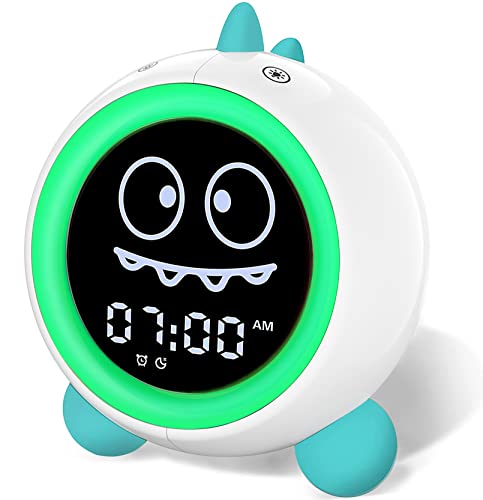
H-chin presents a compact sleep trainer that relies on color cues and facial expressions to convey wake and bed times clearly. A 9-color night light provides warmth and reassurance, with a dimmable clock face to reduce brightness at night. The clock includes 17 soothing sounds, offering a blend of white noise, lullabies, and nature sounds to help children fall asleep and stay asleep longer. The straightforward layout and durable build make it a practical option for families seeking an uncomplicated, child-friendly device that promotes consistent sleep routines.
ANNNGUL Ok To Wake With Night Lights

ANNNGUL’s Ok to Wake Clock focuses on a simple, intuitive setup with a bright night light and a child-friendly design. It features a color-based wake concept and a dedicated nap timer, supporting short daytime rests as well as longer night sleep. The user-friendly interface minimizes accidental changes, and the built-in night light offers 10 vivid color options with a dimmer and auto-off settings. A “child lock” ensures the clock isn’t easily altered by curious hands, helping maintain consistent routines.
Buying Guide
- Visual signals: Consider whether your child responds better to emojis, sun/moon cues, or color-changing lights. Visuals should clearly differentiate wake time, nap time, and bedtime.
- Sound and night light: If a quiet room with soft sounds helps your child sleep, choose a model with a versatile sound machine and adjustable volume. A dimmable night light can provide comfort without disrupting sleep.
- Ease of use: Look for clocks with simple, intuitive controls and a straightforward setup. Child-proof features, such as a lock or reinforced buttons, reduce accidental changes.
- Durability and design: A sturdy build and a design that appeals to your child will increase engagement and adherence to routines.
- Timer and nap options: A nap timer can help structure daytime activities, reading, or quiet play, while multiple wake times can adapt to weekdays and weekends.
- Power and portability: Some clocks are USB-rechargeable or plug-in, which matters for travel or use in different rooms.
- Safety and privacy: Ensure the clock uses non-glare lighting and has safe materials suitable for a child’s room.
- Value and expansion: If you need more than one unit, check compatibility across rooms and whether features sync or remain independent.