Choosing a child-friendly telescope combines safety, ease of use, and the potential to spark a lifelong interest in space. The following picks are tailored for young beginners in the United Kingdom, balancing practical features with durable design. Each option helps kids locate the Moon, planets, and brighter celestial objects with simple aiming aids and lightweight tripods. Read on for five top picks, a concise buying guide, and tips to maximise early stargazing joy.
| Product | Key Feature | Best For |
|---|---|---|
| Cowiewie Telescope for Kids | 360mm focal length, 50mm aperture, 90x max | beginners seeking bright lunar views |
| NASA Lunar Telescope – Blue Marble | Moon-focused, finder scope, 90x | space-curious kids |
| ESAKO Telescope for Kids | 70mm aperture, 150x with Barlow | grows with magnification |
| BESIMLI Telescope for Beginners | 40mm aperture, 400mm focal, 20x/32x | portable starter set |
| NACATIN 70mm Refractor | 3 eyepieces, 1.5x/3x Barlow, moon filter | astronomy and moon observation |
Cowiewie Telescopes For Kids

The Cowiewie entry-level telescope for children features a 360mm focal length and a 50mm aperture, delivering up to 90x magnification. Fully coated optical glass and high-transmittance coatings produce bright, clear images suitable for lunar detail and basic planetary views. A 20mm and a 6mm eyepiece, plus a moonscope, let kids explore both lunar craters and terrestrial scenes. A sturdy aluminium tripod provides stable viewing, reducing fatigue during longer sessions. Lightweight construction makes it a practical, portable option for garden use or observing from a park.
Its practical design focuses on user-friendly aiming and quick target acquisition, helping children locate the Moon and other bright objects with improved confidence. The included tripod and smooth mount contribute to comfortable viewing angles for different heights, making it suitable for first-time stargazers and family observing sessions alike.
NASA Lunar Telescope – Blue Marble

The NASA Lunar Telescope is designed to inspire curiosity with emphasis on lunar detail. It includes a finder scope and both low- and high-power eyepieces, enabling quick and easy lunar target acquisition followed by close-up viewing. A tabletop tripod and smooth mounting system ensure stable, comfortable operation for younger observers. This model is well-suited for beginners who want a dedicated Moon-watching experience without heavy setup. The emphasis on optical quality and ease of use helps children develop initial astronomical skills in a controlled, approachable way.
With its compact form and kid-friendly focal length, the telescope supports short viewing sessions that maintain engagement. The included accessories encourage exploratory routines and help young stargazers gradually understand how magnification relates to object size and distance.
SOLOMARK 80mm Refractor

The SOLOMARK 80mm refractor combines a large 80mm aperture with a stable full-size tripod and a smooth azimuth gimbal. It accepts multiple eyepieces (10mm and 20mm) for magnifications of about 90x and 45x, allowing observers to enjoy both lunar features and broader landscapes. The green-coated optics provide brightness and clarity, while the robust tripod and easy setup cater to both beginners and casual enthusiasts. This model is a strong option for families seeking a mid-range instrument with respectable light gathering and straightforward operation.
Overall, the kit is designed to support progressive learning: from initial object localisation to more detailed exploration as skills grow. The adjustable mount aids in capturing stable, distraction-free observing experiences, essential for keeping younger minds engaged during observational sessions.
NASA Lunar Telescope – 90x (Amazon Exclusive)
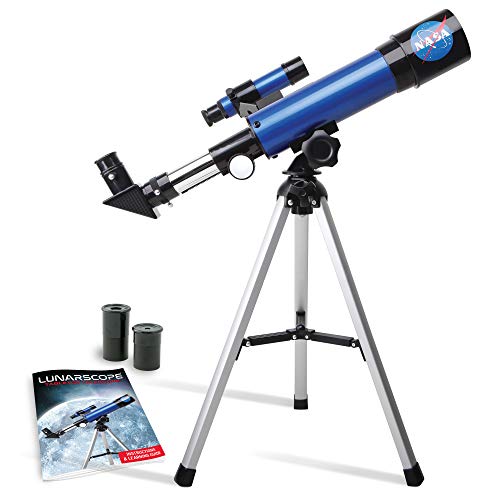
This NASA Lunar Telescope presents a child-friendly 90x magnification with two eyepieces, a table-top tripod, and a finder scope designed to help youngsters pinpoint the Moon’s features. The included hardware supports quick setup and stable viewing, making it suitable for short, focused sessions. The emphasis on easy alignment and user-friendly controls makes it appropriate for beginners who want to observe craters, maria, and other lunar landmarks with clarity. As a space-themed gift, it aligns well with school projects or classroom demonstrations at home.
The device encourages structured exploration: start with locating the Moon, then adjust magnification to observe details. The compact design means it is easy to store and transport for family stargazing trips or holiday viewing sessions.
Buying Guide
- Age-appropriate complexity: For younger children, pick models with simple finders, larger eyepieces, and easy setup to prevent frustration.
- Optical quality: Look for fully coated optics and a reasonably large aperture (40–80mm) to balance light gathering with portability.
- Stability and portability: A stable tripod or table-top stand reduces vibration and enhances viewing comfort, especially for kids who may rush between targets.
- Growth potential: Consider telescopes that offer multiple eyepieces or expandable features (Barlow lenses, additional finders) to support progression as skills improve.
- Educational value: Some kits include moons, planets, or educational guides that align with school learning and STEM activities.
- Maintenance: Choose models with simple care requirements and durable materials suitable for outdoor use.
- Safety and handling: Lightweight designs with protective eyepiece caps and sturdy mounts help prevent accidents during use by children.
- Budget and warranty: Entry-level models offer good value; check for manufacturer warranties and local service options.
Choosing the right telescope involves balancing ease of use with potential for future learning. For families new to astronomy, a model with straightforward alignment and decent light gathering provides immediate satisfaction, encouraging continued exploration. For those seeking a Moon-first experience, a dedicated lunar telescope with a finder scope can quickly build confidence and curiosity without overwhelming beginners.