Choosing the right sprayer for staining a fence can save time and improve finish quality. The following selections are tailored for UK-experienced DIYers, balancing power, capacity and ease of use for fences, sheds, decking and garden furniture. Each option supports common wood stains, varnishes and sealants, with versatile nozzle sets and adjustable flow to suit different timber surfaces.
| Product | Brand | Key Benefit |
|---|---|---|
| Wagner Fence & Decking Paint Sprayer | Wagner | High capacity and universal solvent/water-based compatibility |
| TILSWALL Ultra-Light Electric Paint Sprayer | TILSWALL | Extremely light with multiple patterns and 2 nozzles |
| 1400ML 3-in-1 Paint Sprayer | BELLA·BAYS | Large capacity, 4 nozzles, 3 patterns for flexibility |
| GGiking 700W Fence Sprayer | GGiking | Strong flow with 2 nozzles and three spray patterns |
| ANTREATU 1400ml Fence Sprayer | ANTREATU | High capacity with 4 nozzles and 3 patterns |
Note: All products listed are suitable for staining fences, sheds and related outdoor timber projects. This guide presents features and usage considerations to help you compare performance, maintenance needs and run-time concerns for UK conditions.
Wagner Fence Sprayer For Fences
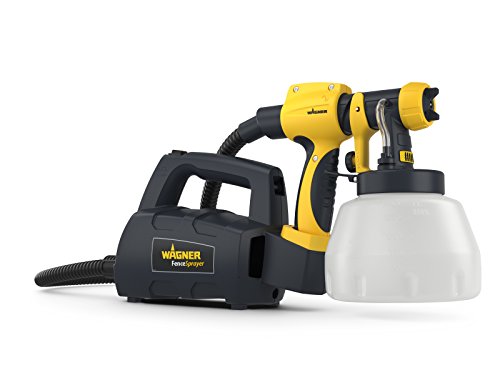
Wagner’s sprayer is designed for small to medium garden projects, covering fences, sheds or garden furniture efficiently. It supports standard solvent or water-based paints and stains, as well as wood preservatives. A key feature is continuous regulation of material volume, enabling precise painting. With a 1400 ml capacity and a 460 W motor, it is well-suited for domestic fence staining jobs and can handle coatings such as stains, varnishes and treatments without requiring specialist sprayables. Its hose length offers flexible reach for typical garden layouts, helping you avoid reloading too often on longer lines.
Benefits for fence staining include compatibility with common timber finishes, straightforward operation and steady material flow control. The device is most effective for mid-sized projects where you want a smooth, even coat on horizontal rails and vertical pickets. For best results, prep the wood by cleaning and lightly sanding, test spray on a scrap area, and maintain regular cleaning to prevent nozzle clogging. Consider a compatible extension or extra nozzle for detailed fence edges if needed.
TILSWALL Ultra-Light Electric Sprayer

The TILSWALL unit emphasises ease of handling with aerospace-grade materials making it around 47% lighter than typical spray guns. It supports fences, sheds, walls and furniture with two nozzles and three spray patterns, facilitating both broad area coverage and targeted edge work. A practical tip is to tighten the trigger screw before use to prevent air leaks, which can affect spray quality. The brand offers responsive support and replacement parts, which can be reassuring for ongoing maintenance on outdoor staining projects.
Its lightweight design reduces operator fatigue on longer staining sessions, helping you maintain consistent coverage across fence rails and posts. The three patterns let you adapt to gaps and boards of varying widths. Maintenance involves cleaning after use to prevent drying residues; this is particularly important when switching between stains or finishes. For fence projects, pairing this sprayer with a mid-viscosity stain helps maintain an even spray without frequent nozzle blockage.
BELLA·BAYS 3-in-1 Paint Sprayer

This 1400 ml capacity HVLP sprayer provides three spray patterns and four nozzles, offering versatility for large fence panels and adjoining boards. The 800 W motor supplies robust atomization, enabling efficient application of stains, varnishes or wood sealants. Its quick-release components aid cleaning after staining, reducing downtime between coats. The combination of higher flow and multiple nozzle sizes helps tailor the finish for different timber textures, from smooth rails to textured fence boards.
Users should consider how often they’ll reload given a 1200 ml to 1400 ml capacity range and the viscosity of the chosen stain. A wide nozzle option supports quicker application on broad surfaces, while smaller nozzles are better for corners and joints. Regular maintenance—cleaning tips, nozzle checks and nozzle replacement—will sustain spray quality in UK weather, especially when staining outdoor timbers after rain breaks or humidity spikes.
GGiking 700W Fence Sprayer

The GGiking 700W model combines solid power with practical capacity and a set of two nozzles plus three spray patterns. It’s designed for fences, walls and furniture, with a maximum flow of up to 1000 ml/min and a robust cast-iron or brass nozzle flow path to resist clogging when using thicker coatings. A wide compatibility range makes it suitable for many timber finishes, including water-based and solvent-based stains. The device is noted for reliable cooling and durable construction, suitable for frequent DIY use in a UK garden environment.
For optimal results on fencing, begin with a test spray on a scrap piece to calibrate the flow, then work in smooth, consistent sweeps along boards. Use the vertical pattern for rail sections and horizontal passes for broad panels. Regular cleaning after each session reduces tip wear and prevents paint buildup at the nozzle region. If staining intricate fence corners, switch to the finer nozzle to maintain edge detail without overspray on adjacent landscaping.
ANTREATU Fence Sprayer With Large Capacity

ANTREATU offers a robust 650 W motor and a 1400 ml tank, designed for fences and sheds with high output and even spray coverage. The sprayer includes four copper nozzles (0.8 mm, 1.8 mm x2, 2.5 mm) and three spray patterns for flexibility with different finishes and timber textures. Its adjustable flow control ranges from 0 to 1200 ml/min, enabling precise paint application for lighter finishes on intricate fence details or full coverage on broader panels. The tool-free assembly and moderate weight enhance manoeuvrability for extended staining sessions.
When using, consider stain viscosity and surface absorption; thicker products may require slower flow rates and broader nozzle selection. The copper nozzles improve longevity against wear compared to plastic alternatives. Regularly inspect seals and fittings to prevent leaks that could complicate outdoor work, and maintain a clean nozzle to prevent clogging after long projects in damp UK conditions.
Buying Guide: Key Considerations For Fence Sprayers
- Capacity and run-time: Larger tanks (1000–1400 ml) reduce reloading frequency for medium-to-large fences, but are heavier to handle. Balance capacity with your typical project size.
- Power and flow control: A strong motor (650–800 W range) helps with thicker stains, while adjustable flow reduces waste and overspray. Look for continuous regulation features and easy flow dials.
- Nozzle configuration: Multiple nozzles (0.8–2.5 mm) and spray patterns (horizontal, vertical, circular) increase versatility for rails, boards and intricate edges. Copper nozzles are generally more durable.
- Pattern suitability: HVLP (high volume, low pressure) tends to deliver smoother finishes on wood, but ensure compatibility with the stain type (water- vs solvent-based).
- Ease of cleaning: Quick-release components and tool-free dismantling speed up post-project cleanup, critical for staining multiple timbers with different coatings.
- Weight and ergonomics: Lighter models reduce fatigue for long sessions; consider models advertised as ultra-light or ergonomic grips for decking work.
- Battery vs mains: Cordless units offer mobility but depend on battery life; mains-powered sprayers avoid downtime but require proximity to outlets.
- Maintenance and availability of parts: Check for replacement parts and nozzle availability, especially if you plan frequent use with varied finishes.
- Surface preparation: Regardless of sprayer choice, clean and prep timber to reduce grain raising and ensure even absorption of stain.
- Weather considerations: Outdoor staining is affected by humidity and temperature; plan sprays during mild, dry windows to prevent uneven finish or drying marks.