Digiscoping combines the reach of a spotting scope with the convenience of a digital camera, letting you capture sharp, high-contrast wildlife images from a distance. The following selections are among the most suitable for digiscoping, offering sturdy builds, reliable magnification, weather resistance, and compatibility with digiscoping adapters. Each product is evaluated for optical quality, ease of use, and transition from observation to capture, to help you choose a scope that complements your setup.
| Product | Key Benefit for Digiscoping |
|---|---|
| SV28PLUS | 25-75x magnification with digiscoping adapter compatibility |
| SC002 WIFI | Wireless capture with smartphone integration for immediate sharing |
| Gosky 20-60×80 | Bright 80mm lens; compatible with camera adapters |
| Celestron Ultima 100mm | High brightness and included digiscoping accessories |
| SV28 Spotting Scope With Tripod | Portable, IP65 waterproof, solid support for digiscoping setups |
Note: Each option below emphasizes digiscoping readiness, rugged design, and ease of use in UK conditions, from weather resistance to straightforward camera attachment. Consider your target subjects, travel plans, and whether you prioritise raw image quality or quick share capabilities when selecting a model.
SV28PLUS: Ideal Digiscoping Scope

The SV28PLUS 25-75x70mm spotting scope is designed for beginners and target observation, with easy-to-use optics and a flexible digiscoping adapter. It delivers a wide magnification range and a 64-43 ft/1000yds field of view, enabling quick framing of distant birds or scenery. Its 45-degree eyepiece design facilitates comfortable long sessions, while IP65 waterproofing protects against rain and dust. A rugged rubber armor provides a secure grip and shock absorption, supporting stable digiscoped captures in variable UK weather.
SC002 WIFI: Wireless Digiscoping Camera

The Svbony SC002 is a dedicated digiscoping camera that attaches to spotting scopes via an eyepiece adapter. It supports 1080p HD video and stills with a straightforward setup: power on, connect to the app, and start recording. The camera supports multiple devices for real-time viewing, enabling shared observations with companions. Its compatibility across eyepiece diameters (37–56 mm) makes it versatile for various scopes, while the built-in zoom and modes facilitate flexible wildlife capture on UK expeditions.
Gosky 20-60×80: Bright Digiscoping Choice

Gosky’s updated 20-60×80 spotting scope offers a broad zoom range with a fully multi-coated 80 mm objective. The BAK4 porro prism design increases light transmission for brighter, crisper images — beneficial when digiscoping in dim woodland or late-day light. Constructed with a durable Magnalium framework and rubber armor, it withstands inclement UK weather and rough handling. The eyepiece shield protects the optic during transport, helping to preserve image quality during field use with camera attachments.
Celestron Ultima 100: Versatile Digiscoping Platform

The Celestron 52252 Ultima spots a 100 mm objective and a 45-degree angled view, delivering strong light gathering and broad fields of view. It includes essential accessories for digiscoping, such as a zoom eyepiece with an integrated T-adapter, plus a carrying case and lens caps. Multi-coated optics enhance colour and brightness, making it suitable for distant wildlife observation. The kit equips observers with a solid platform for high-quality digiscoped imagery in more challenging UK light conditions.
SVBONY SV28: Compact Digiscoping Ready
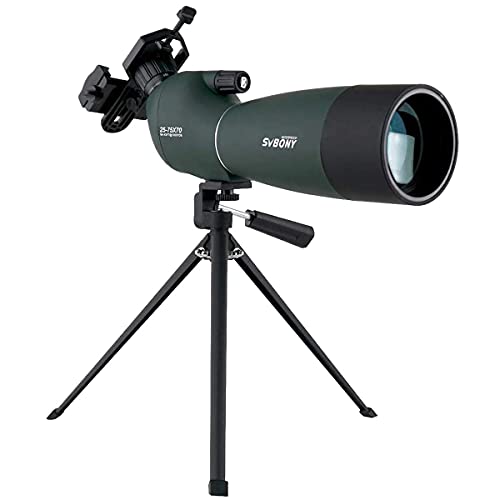
The SVBONY SV28 combines a 25-75x zoom with an IP65 waterproof and fog-proof design, making it well-suited to variable UK weather. Its 70 mm objective lens delivers better light capture for clearer, brighter views. A seamless non-slip finish ensures stable handling in damp conditions, while the included tripod compatibility and digiscoping compatibility options support creating sharp, well-focused images or video across a range of observing scenarios, from birds in flight to distant landscapes.
Buying Guide: Key Considerations For Digiscoping Performance
- Optical Quality: Prioritize scopes with large objective lenses (70–100 mm) and multi-coated optics for brightness and clarity, especially under UK overcast skies.
- Magnification Range: A broad zoom (e.g., 25–75x) helps balance wide framing with detail capture. Consider how often you’ll need high magnification for distant subjects.
- Digiscoping Compatibility: Check for dedicated adapters, T-threads, and ease of attaching cameras or phones. Some scopes include side adapters or come with compatible camera accessories.
- Weather Resistance: IP ratings, fog-proofing, and robust rubber armor reduce risk from rain, humidity, and dew common in the UK.
- Portability: If you travel frequently, a lighter, compact model with a solid tripod and quick setup is advantageous for field use.
- Eyepiece Ergonomics: A 45-degree eyepiece can reduce neck strain during longer observation sessions — a practical benefit when digiscoping.
- Comfort And Stability: A stable tripod and non-slip coatings help maintain image steadiness when attaching a camera, ensuring sharper captures.
- Smartphone And Camera Ecosystem: For quick sharing and social observation, a camera with easy app integration or wireless connectivity can be a major time saver.
- Budget Considerations: Entry-level options may suffice for casual digiscoping, whereas serious wildlife photographers might invest in larger apertures, higher-quality prisms, and more precise focusing systems.