For high handicappers, selecting a soft-feel golf ball can improve comfort, feedback, and control without sacrificing distance. The following products are chosen for their forgiving feel, soft cores, and performance on greens. This guide highlights each option’s design and why it suits developing players in the UK market.
| Product | Brand | Type | Key Benefit |
|---|---|---|---|
| Callaway Hex Soft | Callaway | Soft distance | Low compression for feel and control |
| Wilson Duo Soft TRK360 | Wilson | Soft feel | Very soft feel with dynamic energy |
| Titleist TruFeel | Titleist | Ultra-soft | Softest Titleist with improved greenside spin |
| Titleist Tour Soft | Titleist | Soft feel | Soft, forgiving with consistent flight |
| Longridge Foam Practice Balls | Longridge | Foam | Safe, neighbourhood-friendly practice |
Callaway Hex Soft: Great Feel And Distance

Callaway Hex Soft Golf Balls are designed to balance distance with a soft feel. The HEX Soft construction reduces drag and enhances lift for longer carry, while a low compression core supports speed and distance without compromising feel around greens. High handicappers can benefit from the ball’s forgiving flight, as the optimized aerodynamics help maintain a stable path even when swing tempo varies. The softer cover works to improve feedback on iron and short game shots, aiding skill development without harsh impact on mis-hits.
Wilson Duo Soft TRK360: Silent Power And Precision
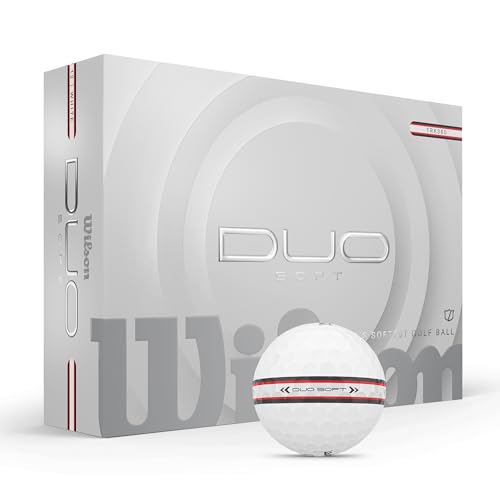
TheWilson Duo Soft TRK360 set targets players seeking a gentle feel paired with consistent energy. The design emphasizes a very soft surface for feedback on impact, while the two-layer core boosts distance off the tee. The flight is engineered to stay straighter on longer shots, reducing the tendency to slice or push. For high handicappers, the ball’s forgiving performance helps maintain confidence on mid-to-long approach shots and around the greens, where feel is critical for control and accuracy.
Titleist TruFeel: Softest Titleist, Great Control

TruFeel represents Titleist’s softest offering with a redesigned TruTouch core and a softer TruFlex cover. The result is an ultra-soft feel that supports greenside control and feedback without sacrificing distance. A low-flying, penetrating ball trajectory is achieved through a refined dimple pattern, which helps golfers maintain a reliable line in windy UK conditions. High handicappers can benefit from improved greenside spin and softer touch on chips, as well as consistently soft feel on full shots.
Titleist Tour Soft: Soft, Forgiving, Versatile

Tour Soft is designed to deliver a soft feel with longer distance and dependable greenside control. The larger, faster core delivers a soft impact sensation, while the 346-dimple design contributes to a straighter and more stable flight. A Fusablend cover offers consistent spin and greenside bite, which helps high handicappers manage short game performance more predictably across a range of UK turf conditions. The overall package emphasises forgiveness, ball speed, and reliable performance on approach shots.
Longridge Foam Practice Balls: Safe Indoor Play

Longridge Foam Practice Balls are a practical choice for beginners and casual practice in confined spaces. These foam balls are neighbourhood-friendly and blister-packed for easy transport and storage. While they are not designed for outdoor use on standard courses, they provide a forgiving option for indoors, schools, or backyards. The foam construction reduces risk to clubs and surfaces, enabling high handicappers to work on swing mechanics, tempo, and contact without worrying about equipment damage or disruptive practice sessions.
Buying Guide: Key Considerations For Soft Golf Balls
- Ball feel and compression: Softer cores typically deliver a gentler impact and improved greenside feedback. High handicappers should seek balls labeled as low to mid compression for a forgiving feel without a dramatic loss of distance.
- Flight and aerodynamics: Ball designs with optimized aerodynamics help maintain stable trajectories, especially in windy UK conditions. Look for models that mention reduced drag or optimized lift.
- Distance versus control balance: Softer balls often sacrifice a small amount of raw distance in exchange for feel and control around greens. Choose a ball that prioritises greenside spin and short-game control if your primary goal is scoring improvement.
- Durability and cover material: Softer covers may feel nicer but can wear more quickly. Consider urethane covers for better spin control and durability, or softer ionomer covers for convenience and cost.
- Practice options: Foam or plastic practice balls are ideal for indoor or garden use. They help with swing mechanics but are not substitute for real-course practice. Use them to refine tempo and rhythm between rounds.
- Environmental and recycling considerations: Recycled and lake balls can offer cost savings but may have cosmetic blemishes. If performance consistency matters, test different options to identify the most forgiving choice for your game.
- Environment and course conditions: UK courses vary in firmness and grass types. Soft-feel balls with higher greenside spin are beneficial on soft fairways and plush greens, whereas closer-to-driver feel matters more on firm turf.
Additional Perspectives
- For strict practice regimes in small spaces, foam balls can build rhythm without worrying about ball flight. They are best used as a supplementary tool rather than a primary golf ball choice.
- When transitioning from practice to on-course play, consider keeping a dedicated set of soft balls for rounds to maintain consistent feel and performance across different courses.
- Different brands offer slightly different soft feels; trying a small variety can help identify which ball aligns with your swing tempo and short-game preferences.