This guide profiles five beginner-friendly remote control planes ideal for new pilots in the United Kingdom. Each model offers stability, simple controls, and features that help first-timers gain confidence quickly. Read on to compare key capabilities, flight times, and entry-level perks to find the best fit for training, learning stunts, or just enjoying a hassle-free afternoon flight.
| Product | Brand | Key Feature |
|---|---|---|
| 4DRC G6 RC Plane (Red) | 4DRC | 2 take-off modes, up to 30+ minutes flight time |
| 4DRC Foam RC Plane (Adults & Kids) | 4DRC | Headless mode, multiple stunts, LED lights |
| Mini RC Plane Blue (KBIBCK) | KBIBCK | Compact, foldable, 6-axis gyro stabilization |
| HAWK’S WORK 2-Channel Plane | HAWK’S WORK | Self-stabilization, simple 2.4 GHz control |
| Makerfire FX-803 | Makerfire | Ready-to-fly with extended battery set |
4DRC G6 Red Starter Plane
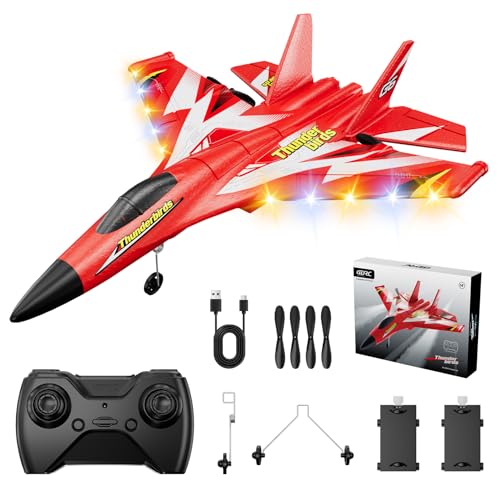
The 4DRC G6 combines beginner-friendly stability with fun maneuverability. It features two take-off modes, including hand-throw and glide launch, and a built-in stabilization system to reduce beginner error. The aircraft can perform basic flight moves such as forward/backward, left/right turns, and up/down elevation with two flight speeds. It is designed as a complete ready-to-fly (RTF) package and includes two batteries, enabling extended flight sessions of 30 minutes or more. Bright LED lights enhance visibility during dusk or night flights, while the 2.4 GHz radio allows multiple planes to fly simultaneously without interference. This model is well-suited to first-time pilots seeking approachable handling and confidence-building flights.
Features in focus: stability system, 2 take-off modes, LED lighting, dual batteries, and a 2.4 GHz control system. The red plastic finish helps visibility outdoors, and the aircraft is designed to be approachable for 8–12-year-olds as well as adults taking up the hobby. Consider battery availability and safe flying space when planning sessions.
4DRC Foam Plane For Beginners
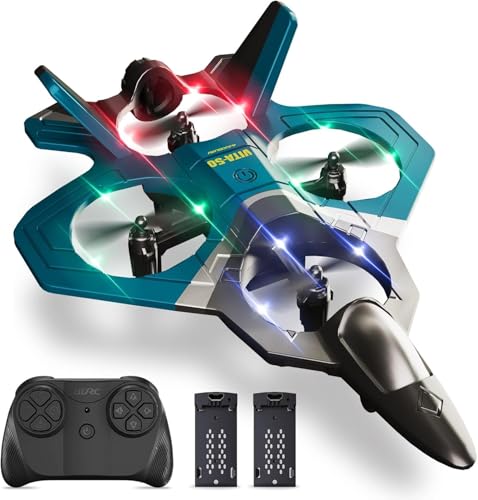
This 4DRC foam RC plane is positioned for easy learning with a straightforward controller and simple button layout. It offers headless mode, three speed levels, and altitude hold to stabilize flight, helping beginners master take-offs, landings, and mid-air control. The design supports aerobatics such as 360° flips and slow, predictable responses for building confidence. The included LED lighting improves tracking in low light, making practice sessions workable in the evening. Quick setup and minimal maintenance make this plane a strong option for families or solo pilots testing the waters of RC aviation.
Key considerations include how headless mode reduces directional confusion, the availability of multiple speed settings for progression, and the safety of foam construction during inadvertent crashes. The craft is suitable for new flyers who want repeatable, forgiving flights with visible visual cues during practice.
KBIBCK Mini Blue RC Plane

The KBIBCK Mini Blue RC Plane is designed for compact and portable flying. Weighing around 20 grams, it emphasizes ease of control and safety in confined spaces. A built-in 6-axis gyroscope provides automatic stabilization to help beginners maintain stable flight. The plane supports both ground takeoff and hand-launch modes, enabling learners to adapt to different takeoff environments. Made from EPP foam, the aircraft is lightweight, impact-resistant, and easy to repair after minor crashes. Its 24 cm wingspan keeps it manoeuvrable without requiring large open space, making it ideal for parks, gardens, or indoor demonstrations when space permits.
Practical considerations include storage in a backpack, the durability of foam, and the availability of spare batteries for longer practice periods. This model is a good stepping stone from micro planes to larger foam trainers.
HAWK’S WORK 2-Channel Starter Plane

The HAWK’S WORK 2-Channel Plane is engineered for simplicity and repetition. It features a built-in self-stabilization system that minimises crash impact and helps beginners achieve smooth, controlled flights. The 2.4 GHz remote supports four-directional control, enabling easy learning of basic maneuvers such as ascent, descent, and turns. With a light and durable foam airframe, the plane can withstand common beginner errors, and multiple aircraft can operate concurrently in the same area without radio interference, depending on space and safety guidelines.
When considering this model, assess the learning curve and how often you can practice in a safe open area. The straightforward control scheme makes it accessible for younger pilots and adults alike who want a reliable introduction to aeromodelling.
Makerfire FX-803 Ready-To-Fly

The FX-803 from Makerfire is a ready-to-fly RC plane that includes everything needed to start flying immediately. It features a 2.4 GHz transmitter for responsive control and 3.7V 150mAh batteries that offer around 15 minutes of flight per battery, enabling longer sessions with a quick swap between packs. The airframe uses EPP foam for durability and a lightweight design, paired with reliable landing gear to reduce impact on touchdown. This model emphasizes practical learning with consistent performance and low maintenance, making it a practical option for beginners who want to progress quickly from basic flights to more advanced manoeuvres.
Key considerations include average flight time per battery, ease of charging and swapping, and the balance between flight duration and stability. The FX-803 suits learners seeking a straightforward, plug-and-play experience with a modular approach to battery management.
Buying Guide: Key Purchase Considerations
- Skill level and progression: Start with models featuring stabilisation, headless modes, or simpler 2-channel controls to ease the learning curve. Look for planes that offer gradual speed settings or multiple take-off options to accommodate growth.
- Durability and materials: Foam (EPP) airframes are forgiving during crashes and lighter for easier control. Consider planes with protective nose cones or reinforced landing gear for extended practice sessions.
- Flight time and battery management: Beginners benefit from longer flight times and easy battery swapping. Check the number of batteries included and the charging options to minimise downtime.
- Control range and interference: A 2.4 GHz system allows multiple planes to fly simultaneously in safe distances. Ensure you have sufficient outdoor space to practice safely and legally.
- Ease of assembly and setup: Ready-to-fly kits reduce setup time. For learners, a simple instruction manual and clear LED indicators help with initial flights.
- Safety considerations: Fly in open spaces away from people, pets, and property. Use protective gear and follow local regulations for hobby RC flying in parks or public spaces.
- Upgrades and future readiness: As confidence grows, you may want planes with more advanced aerobatics. Check spare parts availability and the ease of repairing foam components.