Discover the best mini RC helicopters designed for indoor flights, beginner-friendly controls, and durable builds. This guide highlights compact models from trusted brands, with features like altitude hold, gyroscopes, and multiple speed modes to suit kids and adults alike. Read on to compare options and find the ideal mini helicopter for learning the basics or perfecting trickier manoeuvres inside small spaces.
| Product | Key Feature | Notes |
|---|---|---|
| Syma Q20 Mini RC Helicopter | Aluminium alloy body, altitude hold, dual speeds | Durable for indoor use; beginner-friendly |
| TERRAMUS 2.4G RC Helicopter | Altitude hold, 3.5 channel, LED lights | Light-weight, can fly in small spaces |
| Cheerwing S107/S107G | 3-channel, gyro upgrades, dual frequencies | Compact classic starter model |
| SIMREX RC Helicopter | One-key take-off/landing, altitude hold | Stable flight and longer playtime |
| VATOS Mini RC Helicopter | 2.4G, altitude hold, one-key take-off | beginner-friendly with durable design |
Syma Q20 Mini RC Helicopter

The Syma Q20 is built with a full aluminium alloy body, delivering a robust frame that resists rough landings and bumps. This design supports durable indoor flying and makes it suitable for beginners who want a resilient helicopter as they learn. The model features altitude hold for steady hovering and a built-in gyroscope to smooth out control, reducing drift during flight. With two speed modes—low for learning in tight spaces and high for more advanced maneuvers—it scales with a user’s growing skill level, keeping play engaging for both kids and adults.
TERRAMUS 2.4G RC Helicopter

The TERRAMUS helicopter provides easy control with 1-key lift/land and trim to correct drifting. It has 2.4GHz control, allowing multiple helicopters to fly without interference and a flight time around 13–15 minutes after a roughly 45-minute charge. The model is lightweight and designed to resist minor collisions, with bright LED lights for visibility in dim indoor spaces. It offers both high and low speed options to accommodate beginners and more confident flyers alike, making it a versatile indoor trainer.
Cheerwing S107/S107G Phantom 3CH
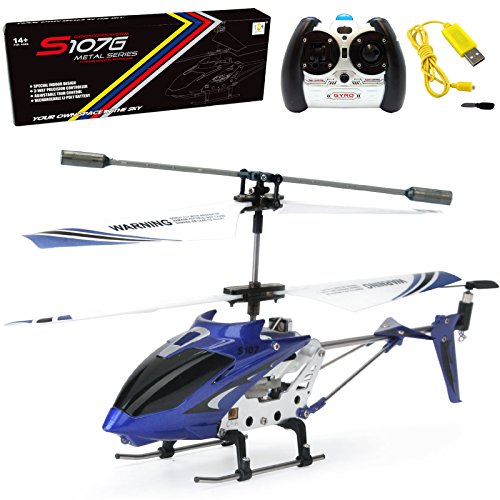
The Cheerwing S107/S107G is a compact, 3-channel helicopter with gyro-based stabilization and dual selectable frequencies. Its straightforward control setup makes it a popular entry-level option for indoor practice and basic acrobatics. The model’s gyro system helps maintain stable hover, while the 3-channel control allows for forward/backward flight and turns, enabling budding pilots to expand their repertoire as confidence grows.
SIMREX Remote Control Helicopter

The SIMREX helicopter emphasizes ease of control with One Key Take-Off/Landing and Trim Control, supported by a gyro for stable flight. The altitude hold feature helps pilots maintain a consistent height after takeoff, and the 2.4GHz transmitter provides a stable, non-jamming connection. It includes a rechargeable battery that offers up to 20 minutes of flight per charge, balancing playtime with practical charging needs for indoor flights.
VATOS Mini RC Helicopter

The VATOS helicopter combines altitude hold, 2.4GHz control, and one-key take-off/landing to simplify operation for beginners and younger pilots. Built to be durable, it uses a sturdy frame designed to withstand indoor use, with LED lighting helping visibility during evening or dusk sessions. The model’s trim control helps correct drift, ensuring a smoother hover and more reliable instructional use for new flyers, including older children and adults exploring their first flights indoors.
Buying Guide
Key purchase considerations
- Indoor suitability: Choose models with altitude hold and stable hover to navigate small spaces without constant input.
- Control system: 2.4GHz transmitters offer less interference and remote robustness; multi-vehicle compatibility is a plus for families.
- Durability: Look for aluminium or reinforced plastic frames to withstand inevitable bumps and crashes during learning phases.
- Flight time vs. charging: Seek a balance between flight duration (roughly 10–20 minutes common) and charging time (usually 30–60 minutes).
- Ease of use: One-key take-off/landing and trim control reduce the learning curve for beginners and younger pilots.
- Power and speed modes: Start with low speeds in tiny rooms and progress to higher speeds as skills improve.
- Maintenance and safety: Check battery safety features and ease of replacement batteries, ensuring compliance with local charging guidelines.
Comparative considerations
- Durability vs. performance: Heavier, aluminium-bodied quads tend to be tougher but may be less forgiving in very tight spaces; lighter plastics offer easier repairs.
- Skill progression: Some models include multiple speeds or 3.5-channel manoeuvres that support gradual improvement, while simpler models are ideal for absolute beginners.
- LED and visibility: LED lights are beneficial for indoor practice in dim lighting and can aid orientation during flight.
- Charging options: USB charging or dedicated chargers influence how quickly sessions resume after a flight.
- Maintenance: Consider models with modular batteries or easy-access parts to simplify ongoing upkeep.