Choosing the right lifting shoes can impact stability, balance, and power during lifts. This guide highlights five top options for women, covering dedicated lifting footwear and versatile trainers that excel in weightlifting, squats, and cross-training. Each product focuses on grip, foot support, and durability to help you lift with confidence in the gym or at home.
| Product | Brand | Type | Notes |
|---|---|---|---|
| MANUEKLEAR Deadlift Shoes | M MANUEKLEAR | Dedicated lifting | Lightweight, breathable, strong support |
| INOV8 Fastlift 360 | INOV8 | Lifting | Sticky grip, flexible outsole |
| INOV8 F-Lite Max | INOV8 | Lifting/Cardio | Balanced cushioning and stability |
| Hike Barefoot Shoes | Snugeasy | Minimalist | Wide toe box, zero drop |
| Under Armour Charged Surge 4 | Under Armour | Running/Training | Breathable, cushioned with responsiveness |
MANUEKLEAR Deadlift Shoes

The MANUEKLEAR Deadlift Shoes are designed as a lightweight, sock-feel option for both men and women. Weighing around 215g, these shoes aim to maximise freedom of movement while providing a snug fit. The upper uses breathable mesh to keep feet dry during workouts, and the sole is widened laterally to stabilize the stance. A sturdy rubber outsole enhances durability and abrasion resistance, while a soft toe cap helps guard against toe wear during lifts. The design prioritises a natural foot position and secure transmission of power from step to thrust, with cushioning and support that reduce fatigue and improve form over long sessions.
Key features include a foot map tailored to form and a consistent, low-profile profile that helps keep the foot close to the floor. The product emphasizes safety and performance, with cushioning that mitigates impact and supports balance across lifts. While marketed for deadlifts and general weight training, its lightweight construction makes it suitable for a range of gym activities, from squats to cross-training circuits. Prospective buyers should consider fit for their foot width and arch height, as well as how the shoe’s flexibility meshes with their lifting style.
INOV8 Fastlift 360 Women’s
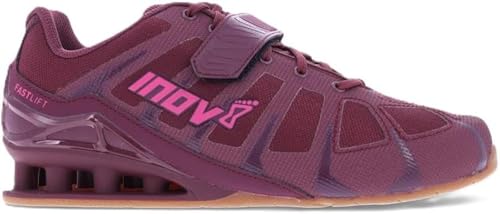
The INOV8 Fastlift 360 Women’s Weightlifting Shoe combines grip, stability, and natural movement. Its outsole features a sticky rubber grip designed to stay sure-footed during explosive lifts, and META-FLEX technology allows for natural foot flexion. A TPU heel cage provides external stability, along with POWERTRUSS support to withstand heavy loads. The upper uses ballistic nylon overlays for rugged durability while allowing movement and comfort. These elements work together to deliver a stable base for squats and Olympic lifts, while still enabling dynamic movements in a broader workout routine. The shoe is aimed at lifters who require reliable traction and a secure, supportive fit during intense sessions.
Considerations include how the external heel cage influences ankle comfort and whether the ballistic nylon upper suits your training environment. The design favours stability over ultra-soft cushioning, making it ideal for athletes who prioritise platform control in lifts. For endurance or cardio-focused days, pairing these with a different daily trainer could provide a balanced footwear rotation.
INOV8 F-Lite Max Women’s

The INOV8 F-Lite Max Women’s Lifting & Cardio Gym Shoe blends lifting capability with cardio performance. It features a grippy outsole 2.5mm thick to provide secure footing across various gym activities, including weightlifting and running. The POWERFLOW MAX midsole delivers a resilient yet cushioned ride, balancing impact absorption with stability for heavy lifts. An engineered air mesh upper enhances breathability while a MET-CRADLE support system helps keep the foot stable during high-impact movements. This makes the F-Lite Max a versatile option for athletes who require a single pair for both lifting sessions and cardio-based workouts.
Potential buyers should weigh the benefit of the upper’s breathability and the support system against personal preferences for cushioning. While the shoe is light, it does not sacrifice midsole rigidity where needed for lifts. Those who frequently switch between barbell work and dynamic interval training may find this model particularly appealing. Adequate width and toe box room can influence comfort for longer sessions.
Snugeasy Hike Barefoot

The Snugeasy Hike Barefoot Shoes are minimalist by design, promoting a wide toe box and zero-drop profile. This approach can foster a natural foot strike and proximal balance during lifting and lifting-adjacent activities. The wide toe box supports toe splay, which may improve stability in wide stances. The zero-drop design reduces heel elevation, enabling a more natural alignment for certain squat techniques and deadlift setups. The anti-slip sole helps maintain grip on varied surfaces, aiding proprioception during balance-focused sets and light cross-training work.
These shoes suit lifters who prefer a barefoot-like feel and value natural foot mechanics over pronounced cushioning. They might be less suitable for lifters who require substantial arch support or heavy heel elevation to achieve proper depth in squats. As with minimalist footwear in general, a period of adaptation is advisable to prevent overuse injuries when transitioning from traditional weightlifting shoes.
Under Armour Charged Surge 4

Under Armour’s UA W Charged Surge 4 is a versatile running/training shoe that emphasizes breathability and responsiveness. The mesh upper helps regulate temperature, keeping feet cool during longer sessions. The Charged Cushioning midsole absorbs impact and returns energy, which can be advantageous during mixed workouts that include short sprints or explosiveness between sets. While primarily a running shoe, its lightweight construction and responsive ride can complement lower-intensity lifting days or transition workouts when you need a stable, well-cushioned base for dynamic movement.
Consider how a running-oriented shoe aligns with your lifting goals. For pure heavy lifting, dedicated lifting footwear may provide a more stable platform, especially for squats and deadlifts requiring a precise foot position. For athletes who value a single pair for varied training days, the Charged Surge 4 offers a balance of comfort, cushioning, and light stability, though it may not deliver the same rigidity as purpose-built lifting shoes.
Buying Guide
Key purchase considerations for lifting shoes for women include fit and width, heel height, outsole grip, and upper material. Women’s feet can differ in arch height and width compared to men’s sizing, so trying different widths or half sizes can improve stability and comfort. Heel height is critical: higher heels can improve depth in squats for some lifters, while lower heels or flat-soled designs may suit others or specific lifts like deadlifts.
Outsole grip is essential for maintaining a solid base during heavy lifts. Look for sticky or well-textured rubber with a reinforced heel area for stability. The upper material should provide a secure fit without compressing; breathable fabrics help keep feet dry under exertion. Consider the versatility of the shoe: dedicated lifting footwear tends to be more rigid and stable, while hybrid shoes offer cushioning for cardio days but may compromise stability for heavy lifts.
Durability is another factor. Materials like ballistic nylon or reinforced uppers extend lifespan in frequent gym use. Weight and flexibility are a balance: lighter shoes can enhance speed and footwork, whereas stiffer designs offer more precise force transfer. Finally, ensure the product’s sizing aligns with your usual UK size, and review return policies if trying a new brand. For athletes who prioritize specific lifts, a dedicated lifting shoe is typically the best long-term investment, while those training across modalities may prefer a high-quality hybrid option.