Finding effective, engaging toys that promote learning can be a challenge. The following hand-picked picks focus on interactive, educational play suitable for UK kids aged 1-6. Each product combines hands-on activities with clear learning outcomes—from early numeracy and language skills to music and fine motor development. The table below highlights the chosen items for quick comparison.
| Product | Brand | Key Benefit |
|---|---|---|
| Interactive Learning Clock | BEST LEARNING | Time-telling with quiz and sleep mode |
| First Piano Book | BEST LEARNING | Portable keyboard with songbook and playback |
| Musical Activity Cube | BEST LEARNING | Six-sided sensor-based learning range |
| Flash Cards With 224 Words | VISATOR | Extensive vocabulary and sounds |
| Montessori Fishing Toy | Shayson | Counting, color sorting and shape learning |
Time Telling Clock

The BEST LEARNING Learning Clock combines visual teaching with interactive audio to help children learn to tell time. This multi-award-winning toy supports early numeracy through hands-on manipulation of the clock hands while the device speaks the time back for reinforcement. In Quiz Mode, children answer time-related prompts, promoting memory and comprehension. The clock also includes a Sleep Mode that plays ten classical pieces and doubles as a night light with twelve timer options up to 60 minutes, making it suitable for bedtime routines. It is designed for toddlers and kids aged 3–6, aligning with early learning milestones while keeping engagement high with music and interactive prompts.
Key features include a hands-on clock face for real-time time-telling practice, an engaging quiz mode to test understanding, and a soothing sleep setting that supports bedtime routines. The toy’s award recognitions reflect its educational value and replayability. When used consistently, it can help children transition from counting hours on paper to reading an analogue clock with confidence.
First Piano Book
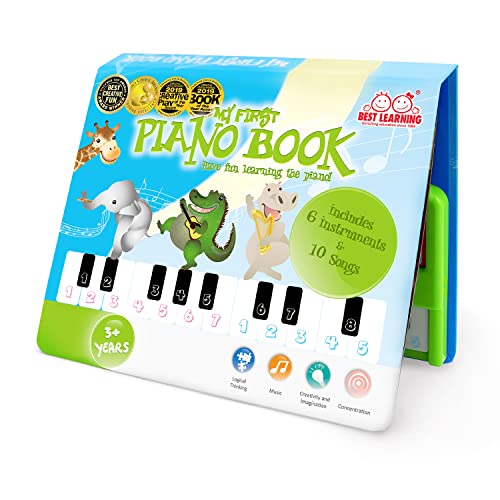
The BEST LEARNING My First Piano Book offers a portable, book-sized piano paired with an illustrated songbook and a coded key chart. Designed for young music enthusiasts aged 3–5, it makes learning to play approachable and fun. The inclusion of ten songs and six musical instruments provides a structured yet flexible learning path for early piano skills. A record-and-playback feature enables children to hear how their performance sounds, which can support self-assessment and motivation. This toy doubles as a compact musical gift suitable for birthdays or nursery engagement, enhancing auditory and fine motor development through repeated, enjoyable practice.
Its multi-award pedigree signals strong educational value and age-appropriate design. The instrument encourages rhythm recognition, hand-eye coordination, and early notation familiarity, while the compact form makes it ideal for travel or small-space play areas. Suitable as a gift, it helps foster a long-term interest in music and sounds, laying a foundation for more advanced musical exploration.
Musical Activity Cube

The BEST LEARNING Learning Cube is an engaging six-sided interactive toy that introduces alphabet, numbers, colors, music, animals, and musical instruments. Each side provides a distinct function to stimulate curiosity through sights, sounds, and songs, reinforcing early cognitive and language skills. The cube’s LED lights illuminate different colors, supporting color recognition and visual tracking. This toy is well-suited for infants to toddlers, encouraging multi-sensory exploration and turn-taking during collaborative play. The design emphasizes safe, developmentally appropriate exploration with clear cause-and-effect learning signals.
Where possible, caregivers can use the cube to scaffold learning: reciting letters, naming colors, and mimicking animal sounds. The customizable play patterns support a wide range of activities—from independent discovery to guided interaction—making it a versatile centrepiece for a small playroom or classroom corner.
Flash Cards With 224 Words

These VISATOR talking flash cards provide a comprehensive literacy tool for ages 2–6. The package includes 112 double-sided cards with 224 sight words across 12 topics, including animals, vehicles, daily necessities, foods, colors, shapes, and more. The device reads words aloud and simulates realistic sounds, which supports listening skills, vocabulary expansion, and early reading development. The compact reader and flash cards are designed for ease of use—insert a card, listen, and repeat. The absence of screens helps protect young eyes while maintaining engagement through multisensory input.
The materials emphasize safety and accessibility, with a portable design ideal for travel or quiet corners at home or school. The system supports independent exploration while enabling adult-led activities that target specific language goals such as pronunciation, word recognition, and sentence formation through guided repetition and play.
Montessori Fishing Toy

The Shayson Montessori Fishing Toy invites toddlers to a hands-on counting and sorting exercise. The 22-piece set includes a fishing pole, 15 colorful fish, five stackable buckets, and an ocean mat that doubles as storage. Designed to support counting, color sorting, and shape recognition, it fosters early math and cognitive skills through engaging play. The Velcro and felt approach replaces magnets for a tactile, safer fishing experience, allowing little ones to practice hand-eye coordination as they “catch” fish. This setup supports imaginative play and sensory exploration while reinforcing early numeracy and classification skills.
The toy’s 22-piece configuration is scalable for group activities and individual play. Caregivers can structure activities around color sorting by bucket, counting fish, and identifying shapes, promoting a structured yet flexible learning routine. It’s well-suited for home playrooms, nurseries, or classroom corners focused on foundational math and problem-solving skills.
Buying Guide
Key considerations when selecting learning toys for kids include age appropriateness, developmental targets, safety, and engagement. For UK households, consider the following:
- Age and skill alignment: Look for toys that match your child’s current abilities while offering a gentle progression to new challenges. Toys like interactive clocks and music books support numeracy, rhythm, and fine motor skills, while flash cards and sorting toys strengthen language and cognitive development.
- Multi-sensory learning: Products combining visual, auditory, and tactile cues tend to boost retention. Items with sounds, lights, and physical manipulation often maintain longer interest and support varied learning styles.
- Safety and materials: Prioritise non-toxic materials, rounded edges, and age-appropriate small parts. Wooden blocks and fabric components often provide sturdier play experiences for toddlers.
- Storage and portability: Compact, lightweight designs with easy storage encourage frequent use and reduce clutter. Consider toys with integrated storage or that fit on a shelf easily.
- Background and validation: Award-winning or teacher-endorsed products typically reflect robust design and educational intent. Use these signals to guide selection, especially for younger children who benefit from structured play.
- Family learning balance: Mixing toys that require parental involvement with those that support independent play can help sustain interest and maximize learning outcomes.
- Budget and longevity: Invest in a core set of versatile toys that can adapt as a child grows. Classic tools like a clock, cube, and basic flash cards often offer lasting value.
Comparing the five highlighted products, you gain a spectrum of learning approaches—from time-telling and music to language development and early numeracy. Consider your child’s interests, the space available, and how each toy can be integrated into daily routines to reinforce learning goals. For households seeking a broad, balanced set of educational toys, these selections provide a solid foundation for steady cognitive, linguistic, and motor development across the early years.