The market for children’s guitars combines beginner-friendly design with engaging learning resources. This guide showcases five kid-friendly options—from structured lesson books to sturdy starter guitars and imaginative toy instruments—helping parents choose safe, age-appropriate picks that nurture early musical skills. Each entry includes a concise product snapshot, key features, and practical considerations for growing with your child’s musical journey.
| Product | Brand | Type | Notes |
|---|---|---|---|
| Hal Leonard Guitar Method – Guitar For Kids, Book 1 | Hal Leonard | Learning Kit | Online audio access included |
| Pyle Beginner Acoustic Guitar (Junior Size) | Pyle | Starter Guitar | All-wood build, nylon string options |
| Mad About Children’s Classical Spanish Guitar 3/4 | Mad About | Starter Guitar | Nylon strings, child-friendly size |
| Battat Lil’ Rocker Toy Guitar | Battat | Toy Instrument | Modes for play and learning |
| Paw Patrol Acoustic Guitar | HTI | Toy Instrument | 4 nylon strings, themed for imagination |
Guitar For Kids: Structured Lessons

The Hal Leonard Guitar Method for Kids, Book 1, offers an accessible route into playing acoustic or electric guitar. It complements beginner practice with online audio access, enabling children to hear and match routines and chords as they progress. The book is designed to engage children through familiar songs and simple chord structures, helping to establish rhythm, pitch, and musical vocabulary from the outset. It’s suitable for independent study or guided lessons, making it a solid foundation for young players with supportive learning materials.
Key features include clear step-by-step instructions, progression-friendly exercises, and supplementary online audio that reinforces listening and timing. While not a full physical instrument, pairing this with a kid-friendly starter guitar can accelerate early confidence and technique development.
Junior Size Acoustic Guitar Kit

The Pyle Beginner Acoustic Guitar is a complete starter kit designed for kids and beginners. Its 76 cm body size offers a more comfortable playing experience for smaller hands, while its all-wood construction delivers a warm, balanced tone. The nylon-string variant is particularly friendly for developing fingers, reducing finger pain during early practice. Included accessories—such as a gig bag, strap, extra nylon strings, and picks—help young players transport and maintain their instrument. The natural wood finish and robust hardware aim to withstand enthusiastic practice sessions, making it a practical first guitar for families investing in a long-term musical hobby.
Considerations include ensuring proper string tension for young players and selecting the right size to avoid posture strain. Regular tuning and a gentle introduction to chords will support steady progress in early months.
3/4 Size Classical Guitar Pack

The Mad About Children’s Classical Spanish Guitar is a 3/4 size model crafted for younger beginners. Nylon strings are easier to press, helping with finger strength development and reducing discomfort during early sessions. The pack typically includes a 600D nylon gig bag for portable practice and lessons, making it suitable for budding players who want to take their instrument to classes or friends’ houses. This guitar introduces classical playing techniques, encouraging proper left- and right-hand positioning while building essential skills such as fingering accuracy and tone control.
Important considerations include confirming age-appropriateness, ensuring a comfortable neck width, and using proper strap and alignment guidance to promote healthy playing habits as the child grows.
Lil’ Rocker Toy Guitar

The Battat Lil’ Rocker is a kid-friendly toy guitar designed to introduce music through play. It offers multiple modes, including play-along tracks and both electric and acoustic-sounding options, to support imaginative engagement and early rhythm awareness. The toy’s colourful design and kid-safe materials help sustain interest in making music, while the built-in song options can motivate young learners to imitate simple tunes. It is best used as a supplementary instrument to nurture listening skills, coordination, and creative exploration, rather than as a primary tool for serious technique development.
Parents should consider activity variety, durability for rough handling, and whether the toy complements actual instrument practice to maintain a balanced musical experience.
Paw Patrol Acoustic Guitar Toy
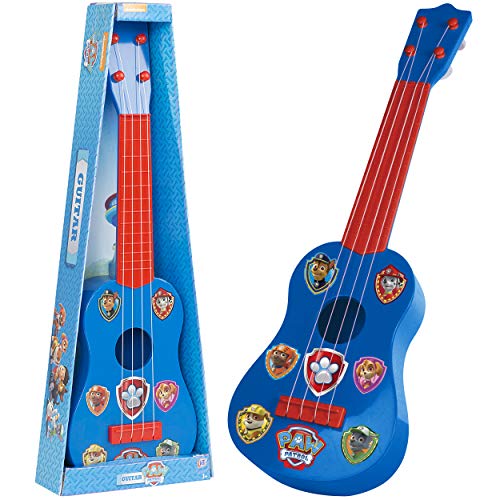
The Paw Patrol Acoustic Guitar is a themed toy instrument designed to captivate younger players through familiar characters. It features four nylon strings that can be tightened to produce a range of tones, aiding early familiarisation with stringed instruments. The guitar is made from durable plastic, making it suitable for toddlers and early primary-aged children who are developing fine motor skills and musical awareness. The toy supports pretend play and role-playing, which can enrich a child’s creativity and emotional expression through rhythm and simple melodies. It’s best used as an introductory instrument alongside guided listening and simple strumming activities.
Buying Guide: Key Considerations For Choosing A Kids Guitar
- Age and size compatibility: For younger children, 1/2 or 3/4 size guitars and shorter scale lengths reduce strain and improve playability. Ensure neck width allows comfortable finger placement for small hands.
- String type and tension: Nylon strings are gentler on fingers and good for beginners, while steel strings offer a brighter tone but require more finger strength. Toy guitars may use plastic strings and are for exploration rather than full playing technique.
- Durability and materials: For kids, sturdy construction and kid-safe finishes are essential. Lightweight bodies and reliable tuners support sustained practice without frustration.
- Learning resources: Structured method books with accompanying audio, video tutorials, or online content can accelerate progress. Consider bundles that combine a guitar with learning materials for a cohesive start.
- Maintenance needs: Consider kit inclusions like gig bags, extra strings, and straps. Nylon-string guitars require less tension maintenance but still need occasional tuning and care.
- Play style and goals: Decide whether the child is more drawn to structured lessons, classical playing, or playful exploration. Toy instruments foster imagination, while full-size starter guitars build technique and musical understanding for longer-term growth.
- Safety and supervision: Ensure any toy or beginner instrument has appropriate safety certifications, non-toxic finishes, and age-appropriate features. Parental guidance remains important during early practice sessions.