Discover top Japanese pull saws that deliver clean, precise cuts with minimal effort. This guide highlights five highly regarded models available to UK buyers, detailing what makes each standout, from blade hardness to ergonomic handles. Whether you’re trimming dowels, dovetails, or fine-brain joinery, these saws focus on accuracy and control while staying comfortable to use over long sessions.
Summary Table of Chosen Products
| Product | Brand | Key Feature | Customer Focus |
|---|---|---|---|
| Heatigo Fine Tooth Japanese Pull Saw | Heatigo | HRC60-63 SK5 steel, beech handle | Pruning, trimming, fine cuts |
| SUIZAN Dozuki Dovetail Saw | SUIZAN | Japanese steel, Made in Japan | Dovetails and joinery |
| Qehyuelefu Small Japanese Pull Saw | Qehyuelefu | 310 mm overall, precise blade | Detailed trimming and pruning |
| JETHMA 10-Inch Japanese Pull Saw | JETHMA | SK5 steel, beech and rattan handle | Ultra-fine cuts, cross and rip |
| Temple Tool Ryoba 7 Ryoba Saw | Temple Tool | Double-edge, crosscut and rip teeth | Joinery and stock reduction |
Heatigo Fine Tooth Japanese Pull Saw

The Heatigo model is a compact wood‑working saw designed for fine cuts. It employs SK5 high carbon steel to produce sharp, clean edges with a thin kerf, reducing effort during trimming and pruning tasks. The blade hardness of HRC60-63 supports durable performance, while the beech wood handle offers a light, ergonomic grip to minimise fatigue during extended use. This saw is suitable for precise detail work where a small, controlled stroke is beneficial.
Features emphasize precision over speed, making it ideal for hobbyists and professionals who require clean finishes on small projects. The pull-saw action helps prevent blade wandering, and its balance supports stable cuts when handling delicate joints or finished surfaces. For UK buyers, the compact size aids storage and transport between work sites.
SUIZAN Dozuki Dovetail Saw

The SUIZAN Dozuki is a traditional Japanese pull saw designed for fine joinery. It uses top-quality Japanese steel and is manufactured in Japan, ensuring consistent edge sharpness and long-lasting performance. The pull-cut design yields narrow kerf cuts with less material displacement, which is particularly advantageous for dovetails and precise joinery. Light in weight, it requires less force than many Western push saws, helping reduce user fatigue during precision tasks.
Crafted with a heritage of over a century in craft towns, this tool reflects a focus on accuracy and craftsmanship. It’s well suited to carpenters and woodworkers who prioritise clean, accurate cuts in detailed projects such as drawers, boxes, and fine furniture components. The blade’s sharp edge and reliable steel composition contribute to dependable results across various hardwoods and softwoods.
Qehyuelefu Small Japanese Pull Saw
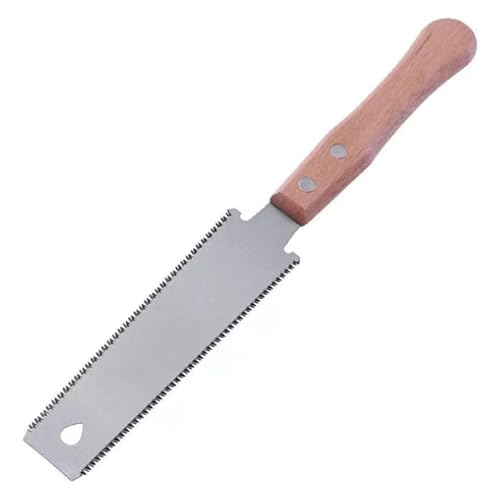
This small pull saw from Qehyuelefu provides precise cutting for trimming and pruning tasks. With an overall length of 310 mm and a blade length around 150 mm, it is balanced for fine control. The blade is described as high hardness and sharp, enabling easy, fast, and smooth cuts through various materials. The ergonomic design targets reduced hand fatigue and vibration, which is helpful during longer work sessions or delicate operations where precision matters most.
The double-sided versatility allows for both rip cuts and cross cuts, making it flexible enough for tasks such as trimming branches, dowels, or small joinery components. For UK woodworkers who frequently work on detailed woodcraft projects, this model offers a practical balance between control and performance in a compact form factor.
JETHMA 10-Inch Japanese Pull Saw

The JETHMA 10-inch pull saw uses SK5 high-carbon steel for a strong, wear-resistant blade. The handle is a combination of beech wood and rattan, delivering a lightweight, ergonomic grip intended to save time and effort during extended cuts. The tool is positioned as suitable for ultra-fine cuts, offering both rip and cross-cut capability with a single, well-balanced saw. This makes it a practical choice for precise joinery, small bevels, and finish work where clean edges are essential.
With a larger 10-inch blade relative to some compact variants, it broadens working area and reduces repetitive motion. This size is advantageous when precision is needed over a broader cut path, such as trimming longer dowels or preparing components for joinery that require tight tolerances at multiple faces. The quick switching between cutting modes helps streamline workflow in workshop environments.
Temple Tool Ryoba 7 Ryoba Saw

The Temple Tool Ryoba offers double-edge functionality with both rip teeth on one side and crosscut teeth on the opposite side. This design enables versatile cuts without needing multiple tools, making it ideal for joinery and stock reduction tasks. At 180 mm, the compact size provides enhanced control and precision for intricate work or projects requiring detailed trimming. The saw’s dark Wingnut wood handle and brass fittings add durability and an aesthetic touch while supporting comfortable handling during extended sessions.
For UK woodworking projects such as dovetails, tenons, or small boards, the Ryoba’s dual-edge capability helps keep workflows efficient. The softer, traditional handle design reduces fatigue, while the precise teeth profile supports clean cuts along or across the grain, depending on the chosen edge. This makes it a balanced option for woodworkers seeking flexibility in a single tool.
Buying Guide: Key Purchase Considerations and Comparisons
- Blade material and hardness: Look for SK5 or other high-carbon steels for durability and edge retention. Hardness (HRC) around 60–63 supports clean, long-lasting cuts.
- Teeth arrangement: Double-edge (ryoba) saws provide rip and cross-cut options in one tool, while single-edge models may specialise in one task. Choose based on typical projects.
- Blade length and kerf width: Longer blades cover more area but can be heavier. A thin kerf reduces material loss and effort, particularly on delicate work.
- Handle design and ergonomics: Beech wood or ergonomic handles reduce fatigue. Consider weight balance for control during precise cuts.
- Pull stroke vs push stroke: Japanese pull saws cut on the pull stroke, which often yields cleaner edges with less blade deflection and reduced cutting force compared to push saws.
- Maintenance and replacement: Some models offer replaceable blades or easily replaceable components, extending tool life and flexibility for different tasks.
- Intended use: For dovetails and joinery, prioritise ultra‑fine cuts and sharp edges. For trimming and pruning, compact sizes with precise control are beneficial.
- Weight and portability: Lighter tools are easier to maneuver for intricate tasks, while heavier versions can feel more stable for longer sessions.
- Manufacturing origin: Saws produced in Japan or by brands with a long tradition of knife and saw making often reflect high craftsmanship and consistent performance.
- Budget considerations: While premium models deliver consistent performance, several mid-range options provide reliable results for hobbyists and professionals alike.