Parents in the United Kingdom increasingly look for interactive toys that stimulate learning, creativity and active play. The following selections offer engaging features—from voice control and recording to map-quiz activities and language development. Read on to compare options that suit toddlers to pre-teens, with safe designs and age-appropriate functions.
Summary Table of Selected Products
| Product | Brand | Key Features |
|---|---|---|
| KaeKid Astronaut Robots for Kids | KaeKid | Voice control, touch control, singing, dancing, recording, 360° spin |
| Molleyzi Educational Tablet for 1-4 Year Olds | Molleyzi | 3+5 learning modes, interactive content, eyes-friendly screen |
| BEST LEARNING i-Poster Europe Map | BEST LEARNING | EU geography facts, interactive talking map |
| Talking Flash Cards by VISATOR | VISATOR | 224 words, 12 topics, audio pronunciation, portability |
| BEST LEARNING i-Poster United Kingdom Map | BEST LEARNING | UK geography facts, quiz mode, fabric frame |
KaeKid Interactive Robot

The KaeKid Astronaut Robots are an interactive toy designed for children aged 3-8. This AT-Robot supports voice and touch control, enabling forward, backward, left, and right movements along with 360-degree spins. It can sing, dance and engage in conversation, providing an engaging play companion. The robot offers multiple modes, including working, recording and sleeping. In recording mode, users can record up to eight seconds per session, with a total of three recordings available. Voice commands are recognized to trigger actions, and a “goodbye” or “sleep” command powers the robot down, requiring a chest button press to reactivate.
Molleyzi Educational Tablet

The Molleyzi educational tablet is designed for children aged 2-4 years, offering touch-driven interactive learning with content across music, stories, words and basic calculations. It features three primary modes—word, note and letter—with eight learning modes such as calculation, spelling, question answering, and animal recognition. The device supports independent learning or collaborative play with family. It uses safe materials and a compact, kid-friendly design. Volume control is adjustable, and the device emphasizes eye-friendly display design to protect young eyes.
Europe Map i-Poster
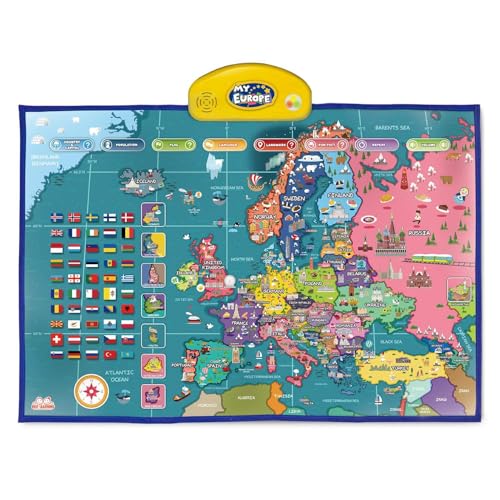
The BEST LEARNING i-Poster Europe Map is an interactive educational map that combines geography with engaging storytelling. It highlights Europe with over 300 facts and quiz-style questions, making it a fun way to learn about countries, capitals and landmarks. The product has earned multiple awards, including Mom’s Choice Gold Metal and other family-focused recognitions. It is designed for children aged 5 to 12 and doubles as a wall display or play mat, enhancing classroom and home learning alike.
Talking Flash Cards For Toddlers

The VISATOR Talking Flash Cards for toddlers provide 224 sight words across 12 topics, presented with 112 double-sided cards and a compact learning machine. Topics include animals, vehicles, foods and daily necessities, making them suitable for ages 2-6 and supportive for autism-friendly sensory learning. The device reads words aloud, with realistic sounds that reinforce pronunciation and comprehension. It also allows repeat playback and adjustable volume, promoting independent learning or guided family sessions.
UK Map i-Poster

The BEST LEARNING i-Poster United Kingdom Map brings UK geography to life with a fabric-framed, interactive speaking poster. Aimed at children aged 5 to 12, it offers more than 300 facts and quiz-style questions, enabling learners to test knowledge in both wall-mounted and floor-play formats. The fabric frame adds a premium feel and durability for repeated use in homes or classrooms.
Buying Guide: Key Purchase Considerations
- Age and developmental fit: Choose toys aligned with the child’s age range and cognitive level to ensure safe, engaging play.
- Interactivity and learning value: Prioritize devices offering a mix of audio, visual and hands-on activities to support language, numeracy and spatial awareness.
- Learning vs. entertainment balance: Consider how much instructional content is included and whether the toy encourages independent exploration or guided play with a caregiver.
- Durability and safety: Look for sturdy construction, non-toxic materials and certified safety standards suitable for young children.
- Portability and storage: For portable devices, ensure compact design and easy storage to keep play neat and accessible.
- Screen exposure: For tablet-like toys, prefer models with limited screen time and eye-friendly displays to protect children’s eyesight.
- Content variety and expansion: Some toys offer additional modes, activities or flashcards to extend learning beyond initial offerings.
- Battery life and charging: Check battery duration and recharge options; if batteries are required, ensure they are child-friendly and replaceable.
- Educational scope vs. skill focus: Decide whether you want general knowledge—geography, language, shapes—or specific skills like reading or memory recall.
In summary, the listed products span robotics, early learning tablets and interactive maps, offering varied avenues for curiosity-driven play. When selecting, assess how each toy supports foundational skills such as language development, memory, critical thinking and observational learning, while keeping safety and age-appropriateness at the forefront.