Choosing the right hole saw for metal work helps achieve clean, accurate holes with less effort and wear on tools. This guide highlights five highly capable hole saws suitable for metal, wood, plastics and more. Each entry includes practical features, material compatibility and cutting depth to help you compare for projects from automotive to cabinetry. The following picks prioritise durability, heat resistance and efficient cutting, making them suitable for frequent use in UK workshops.
| Product | Diameter | Material Focus | Depth | |
|---|---|---|---|---|
| Starrett Deep Cut DCH0278 73mm | 73 mm | Metal, Wood, Cast Iron | 51 mm (2″) | Extra cobalt HSS teeth; deep cut |
| flintronic 60mm Bi-Metal | 60 mm | Metal, PVC, Wood | Not stated | Shock resistant teeth; clean edge |
| Starrett Deep Cut DCH0136 30mm | 30 mm | Metal, Wood, Plastics | 51 mm (2″) | Deep cut; enhanced heat resistance |
| Starrett HSS Bi-Metal Fast Cut 19mm | 19 mm | Metal, Wood, Plastics | 41 mm | Extra cobalt teeth; fast smooth cut |
| HOME COMPOSER 25mm | 25 mm | Wood, Plastic, Thin Metal | 30 mm Depth | Carbide/bi-metal design; efficient |
Starrett Deep Cut 73mm

The Starrett Deep Cut Hole Saw with DCH0278 designation is built for heavy-duty metal work. It uses high-quality HSS (high-speed steel) teeth with cobalt reinforcement, delivering sharpness, corrosion resistance and wear resistance under high heat. The 73mm blade is designed for deep cuts, with a noted depth of 51mm (2 inches), making it suitable for metal plates thicker than 3mm, as well as tubes and wood up to 2 inches thick. The blade claims a smooth cutting action with reduced vibration, though users should pair it with an extended-length arbor and pilot drill for optimal alignment. This option is ideal for workshop tasks that demand both durability and depth for larger holes.
Key considerations: heat management matters in metal cutting; ensure your drill setup supports extended pilots when using deep-cut blades; monitor wear on the teeth and replace promptly to maintain clean edges. This Starrett model offers long service life when used with compatible arbors and high-quality drill presses or variable-speed drills.
flintronic 60mm Bi-Metal

The flintronic 60mm Bi-Metal Hole Saw is a versatile cutter designed for metal, wood and plastic. Its high-speed steel cutting edge provides shock resistance and tooth retention, helping minimise tooth loss during heavy cuts. The kit is adaptable to standard drill setups and supports a variety of materials, including metal pipes, castings and aluminium alloys. The design emphasizes clean, non-binding edges and an auto-eject spring feature to push the disc clear after drilling. This helps reduce jamming and improves cutting efficiency in mixed-material projects. It’s a practical choice for electricians, carpenters and DIYers cutting circular holes for handles, locks and fixtures.
Considerations: ensure compatibility with your drill type (bench drills, portable hand drills, or drill presses). The durability of the teeth and the resilience of the body will influence performance on tougher materials. The 60mm size makes it well-suited for door hardware installations and similar tasks.
Starrett Deep Cut 30mm

The Starrett Deep Cut Hole Saw in a 30mm diameter targets precision holes through metal and wood with a deep cutting profile. Like its larger counterpart, this blade uses high-quality HSS with cobalt elements to improve heat resistance and tooth wear. The 51mm (2″) depth enables cutting through thick metal sections and dense wood alike; it’s suitable for projects requiring deeper holes without turning to multiple passes. The blade’s design emphasises fast, clean cuts with reduced friction, but users should maintain consistent feed pressure and avoid overheating to preserve the edge geometry over time.
Things to note: match this blade with a stable arbor and pilot drill of adequate length. For metal-heavy work, consider using a drill with adequate torque and a suitable cooling approach to prolong tip life and maintain hole accuracy.
Starrett 19mm Fast Cut
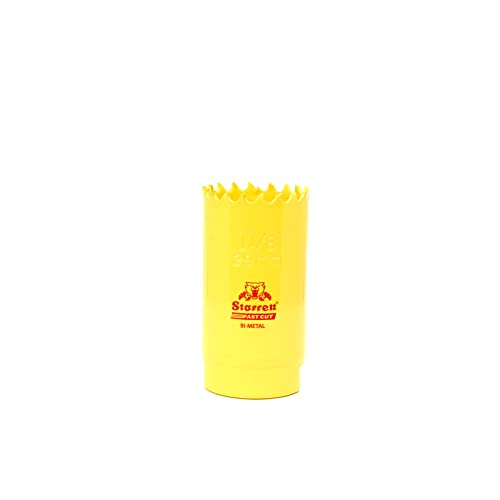
The Starrett HSS Bi-Metal Fast Cut 19mm focuses on speed and efficiency. Its extra cobalt HSS teeth promise quicker, smoother cuts through metal, wood and plastics, with a non-binding edge design to reduce snags. The design supports cutting through metal up to about 3mm stainless or mild steel sheets, and through tubes with up to 3mm wall thickness. A 41mm (1.5/8”) depth ensures you can go deeper in a single pass, which is advantageous for cabinetry, metalwork housings and conduit installations. This blade is a practical choice for professional tradespeople seeking fast performance in standard workshop drills, including cordless options.
Operational tips: work with a controlled feed, avoid overloading the drill motor, and consider a coolant or cutting oil for metal to lengthen life in demanding tasks.
Starrett 25mm Fast Cut

The Starrett 25mm Fast Cut provides a compact option for precise holes in metal, wood and plastics. The patent-pending fast-cut tooth pattern ensures a smoother finish and efficient chip removal. Its 41mm depth remains consistent with other Fast Cut designs, making it suitable for light to mid-duty applications like electrical panels, metal enclosures and small plumbing penetrations. The blade’s bi-metal construction supports longevity, reducing the likelihood of tooth chipping under normal use. For users with portable drills or compact drill presses, this blade delivers reliable performance for thinner metal sections and studs.
Buying Guide: Key Purchase Considerations
- Material compatibility: If cutting primarily metal, prioritise cobalt-enhanced HSS or bi-metal blades to improve heat resistance and edge life. For mixed materials, choose blades with versatile teeth designed for metal, wood and plastics.
- Cut depth: Deep-cut blades (up to 51 mm) are best for thick metal sections or tubes. For thin metals, standard depths are often sufficient and can reduce blade wear.
- Tooth geometry: Positive rake and staggered teeth increase cutting speed and reduce binding. Non-binding edge designs help prevent snags, especially in metals with coatings or alloys.
- Diameter variety: A set of diameters from around 19 mm to 73 mm covers common electrical, plumbing and furniture hardware needs. Consider owning both small and large sizes for flexibility.
- Arbor compatibility: Use arbors designed for extended pilot drills with deep-cut blades to ensure accurate centering and straight cuts. Ensure arbor length matches the thickness of workpieces.
- Drill compatibility: High torque, variable-speed drills or drill presses with steady feeds yield cleaner cuts and reduce overheating. For cordless drills, battery life and RPM consistency matter for efficiency.
- Maintenance: Keep blades clean and free of debris. Use cutting oil or coolant on tough metals to prolong blade life and maintain edge sharpness.
- Safety: Wear eye protection and gloves. Secure long workpieces and clamp materials to prevent movement during cutting. Inspect blades for damage before use.
In summary, the selected blades prioritise depth, durability and efficient cutting for metal-focused work while offering reliable performance for mixed materials. When choosing, consider the thickness of the metal, the desired hole diameter and the capabilities of your drill or drill press to ensure optimal results and tool longevity.