Drilling into plaster requires tools that minimize breakout and handle underlying materials like brick, tile, or wood. This guide highlights five top choices ideal for plaster work, from multi-material drill bits to carbide hole saws and demolition power tools. Each option offers a balance of sharpness, durability and ease of use to help you achieve clean holes in walls, tiles and surrounding substrates without excessive effort or damage.
| Product | Brand | Best For |
|---|---|---|
| QWORK 5 Pcs Multi-Material Drill Bits Set | QWORK | Tile, mirror, concrete behind plaster |
| 27mm Carbide Grit Hole Saw | The Amazing Tile And Glass Cutter | Tiles, ceramic, brick, drywall edges |
| Bi-Metal Hole Saw Kit 70mm | sourcing map | Wood, plastic, drywall, light masonry |
| 64mm Carbide Grit Hole Saw | The Amazing Tile And Glass Cutter | Brick, tile, cement backing |
| 1500W Electric Demolition Jackhammer | Lucn | Breaking plaster, removing tile, chiseling concrete |
When choosing bits for plaster, consider the material behind the plaster (tile, brick, concrete), the hole size you need, and whether you require clean edge cuts or fast material removal. The selections below cover common plaster tasks such as installing fixtures, routing through tile, and preparing access for wiring or plumbing without excessive dust or breakout.
QWORK Multi-Material Drill Bits
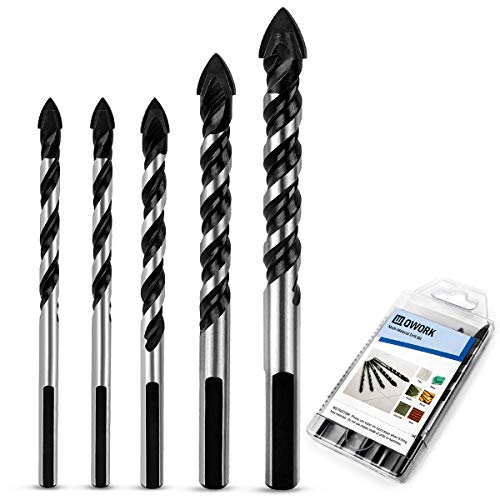
This 5-piece set combines two drill bits into one practical solution for plaster walls with tiles or mirrors behind them. The spear-point tungsten carbide tip is designed to cut through tile, glass, concrete, brick, plastic and wood, reducing breakout and extending tool life. The set includes four sizes: 6mm, 8mm, 10mm, and 12mm, enabling precise hole sizes for fixtures, fasteners, and wiring. By combining a glass-and-tile capability with masonry performance, these bits help users drill through tiled surfaces without switching tools mid-project. Use is especially convenient when mounting bathroom fixtures or wall-mounted mirrors where plaster is present behind ceramic tile.
Key considerations: ensure the pilot hole is straight, start slowly to avoid bit wandering, and use appropriate drill speed settings for tile versus masonry behind plaster. The carbide tip performs well in masonry after the tile, but use a steady hand and appropriate backing when drilling through plaster-backed tile and into brick or concrete.
27mm Carbide Hole Saw

The 27mm carbide grit hole saw is designed for tough materials where typical toothed hole saws dull quickly. Carbide grit provides durability for cutting through brick walls, tiles and ceramic substrates often encountered behind plaster. It’s especially useful when you need recessed outlets or conduit runs, where a clean circular cut is essential. The tool works with compatible arbors and is best used with a pilot bit to establish an accurate starting point. This hole saw avoids snagging on tile edges and reduces risk of chipping around delicate plaster surfaces.
Usage notes: secure the workpiece, align the pilot hole, and use steady, moderate feeds. For concrete or brick behind plaster, a hammer drill function may be needed, and ensure you have the correct arbor for the carbide bit.
Bi-Metal Hole Saw Kit 70mm

This kit uses M42 high-speed steel for durability and wear resistance, making it suitable for wood, plastic, drywall and light masonry behind plaster. It includes a 70mm hole saw, two center drills and a wrench, with a hex shank arbor for compatibility with many power drills. Precise positioning helps reduce misalignment when starting a hole, while sharp teeth enable quick cutting with burr-free edges. It’s a practical choice for electricians or plumbers running conduit or pipes through plaster walls where backing materials vary.
Practical tips: use a center drill to initiate the cut, maintain steady pressure, and keep the drill axis perpendicular to the surface to prevent elongated or off-center holes.
64mm Carbide Hole Saw

The 64mm carbide grit hole saw is designed for robust materials and larger channel openings through plaster, tile and backing substrates. Carbide grit provides longer life and resistance to dulling, ideal for dry-lining or masonry behind plaster. It’s important to use the appropriate arbor and avoid forcing the tool, especially in ceramic tile areas where edges can chip. This bit excels for larger conduit runs or ventilation openings that require clean, round holes without micro-cracks.
Consider pairing with a spring guide and pilot drill to ensure straight entry. For best results, use slow-to-moderate feed rates and maintain a cool cutting surface to extend the life of carbide tips.
1500W Demolition Jackhammer

This 1500W demolition jackhammer is designed for aggressive plaster removal, tile chipping, and light masonry work. It incorporates a 360° rotating handle for comfortable operation and a vibration control system to reduce user fatigue during extended use. The SDS-plus compatible tool holder allows quick tool changes, making it suitable for users who need to switch between chisels, point bits and drill bits. While not a precision drilling bit, it supports tasks where rapid material removal is required before finishing with finer bits for plaster or tile work.
Key points: ensure proper PPE, use the correct chisel or drill bit for the job, and follow manufacturer guidelines for depth and speed settings. This tool is best for larger demolition tasks or preparing openings before applying plaster or tile patches.
Buying Guide
When selecting drill bits and related tools for plaster work in the UK, consider the following factors:
- Material behind plaster: tile and mirror require carbide-tipped or specialized hole saws; brick or concrete demand masonry bits with suitable carbide or steel composition.
- Hole size and edge quality: carbide grit and larger diameter hole saws are ideal for clean cuts in tiles and plaster-backed surfaces, while bi-metal options offer versatility for wood, plastic and drywall.
- Arbor compatibility: ensure the drill bit or hole saw has a compatible arbor and shank size (often 3/8″ or hex shank) for your drill.
- Drill type: hammer drills or SDS-plus tools may be necessary for masonry behind plaster; use appropriate protective settings and appropriate pilot bits to reduce wandering.
- Speed and feed: softer plaster benefits from steady, slower feeds to reduce breakouts; tougher backing behind plaster may require higher torque and controlled speed.
- Tool wear and life: carbide-tipped and carbide-grit bits typically offer longer life in masonry and tile work than standard steel bits; consider kit versatility for a range of plaster tasks.
- Safety: always wear eye protection and dust masks, particularly when cutting through plaster with tile or drywall behind it, to minimise dust and debris.
In summary, for plaster tasks involving tile or mirror behind plaster, start with multi-material drill bits and carbide hole saws for clean cuts, and consider a demolition tool for larger openings or heavy removal. Pairing the right combination of bits with a suitable drill helps achieve precise results while minimising damage to plaster surfaces.