For UK stargazers, a reliable pair of binoculars can open up the night sky without the bulk of a telescope. The right optics reveal crisp star clusters, the Moon’s details, and distant celestial objects with clarity. This guide highlights five top binoculars well-suited for astronomy, balancing magnification, light transmission, and ease of use. Each entry includes a quick snapshot of features and a practical look at who benefits most from it. Use these picks to enhance evening skywatching, lunar observation, and wide-field celestial scans.
Summary Table of Selected Products
| Product | Magnification & Objective | Key Benefit | Best For |
|---|---|---|---|
| Kylietech High Power 12×42 | 12×42 | Bright, versatile for landscapes and stargazing | Beginner to intermediate observers |
| usogood 12×50 | 12×50 | Phased with phone adaptor and tripod for astronomy capture | Planetary and deep-sky glimpses |
| Celestron SkyMaster 20×80 | 20×80 | Large objective for dim conditions; tripod-ready | Dusk/dawn astronomy |
| Celestron SkyMaster 15×70 | 15×70 | Good balance of power and portability | Moon and star fields |
| ESSLNB 15X70 | 15×70 | Strong light transmission with phone/tripod adapters | Beginner astronomers |
Kylietech High Power 12×42 Binoculars

Kylietech offers a compact, versatile option for stargazers and outdoor enthusiasts. The 12×42 configuration provides a bright image with a 42mm objective, delivering a substantial field of view and comfortable eye relief for extended sessions. The BAK4 prism and multi-coated glass enhance brightness and color fidelity, which helps when scanning star fields or tracking the Moon’s surface. A dual focus system, including a diopter adjustment, supports users with varying vision and even eyeglass wearers. The included smartphone adapter adds a practical edge for capturing starry scenes or planetary details.
Designed for outdoor use, these binoculars are weather-sealed to resist moderate fog and light rain, making them suitable for field astronomy despite UK weather variability. While not a heavy-duty astronomical pair, their balance of magnification, brightness, and ergonomics makes them a strong starter option for casual stargazing, wildlife monitoring, and travel viewing where size and weight matter.
usogood 12×50 Binoculars With Tripod And Phone Adapter
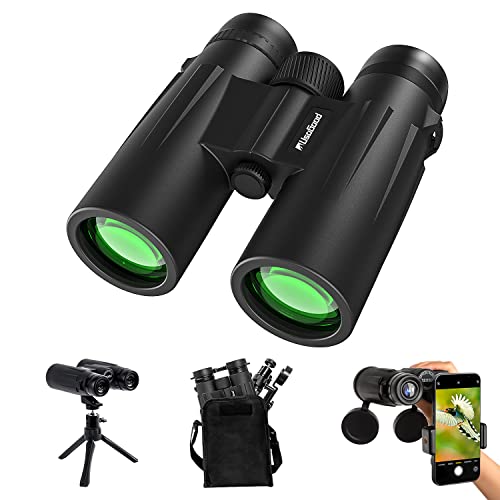
The usogood 12×50 binoculars are aimed at observers who want a brighter view with an accessible setup for astrophotography. The 50mm objective supports greater light capture than smaller models, helping daytime versatility and nocturnal views alike. A dedicated phone adaptor and tripod inclusion enables stable long-exposure-like captures and consistent viewing, which is particularly useful when observing star clusters or the Moon under less-than-ideal sky conditions. The optics employ FMC coatings and BaK-4 prisms to improve light transmission and edge-to-edge clarity, delivering a vivid celestial scene even when moonlight is faint.
Adjustable interpupillary distance and twist-up eyecups ensure comfortable use for a range of users, including those who wear glasses. While handheld viewing is possible, a tripod dramatically expands the potential for detailed astrophotography and extended skywatching sessions, making this model a practical gateway to more serious astronomy gear.
Celestron SkyMaster 20×80 Binoculars

These large, tripod-mountable binoculars are built for serious astronomy and long-range terrestrial viewing. The 20×80 configuration delivers strong light gathering and a wide aperture suitable for dawn or dusk sessions and distant celestial surveys. The user is encouraged to mount them on a traditional tripod (not included) to stabilise the image for extended observations. BaK-4 prisms and multi-coated lenses maximize light throughput, producing brighter, sharper views of star fields, the Moon’s craters, and distant galaxies under darker skies. This model is ideal for dedicated hobbyists with tripod access seeking greater angular resolution and depth perception.
Given their size and weight, these binoculars suit stationary viewing rather than quick-portable use. They pair well with a dedicated astronomy setup where portability is less critical but optical quality and light transmission are paramount.
Celestron SkyMaster 15×70 Binoculars

The 15×70 SkyMaster balances magnification with practical portability, making it a popular choice for astronomy novices and enthusiasts alike. The 70mm objective boosts light intake, beneficial for low-light stargazing, lunar studies, and wide-field star field sweeps. A sturdy tripod is recommended for precise observation, as the higher magnification can amplify small movements. BaK-4 prisms and multi-coated optics contribute to a clearer, brighter image, maximizing the visibility of fainter stars and subtle lunar features. This model is well-suited for users seeking a step up from beginner gear without venturing into heavier, more specialised equipment.
Its design ease-of-use, together with a robust build, makes it a staple recommendation for those building a foundational astronomy kit and for educational use in astronomy clubs and school settings.
ESSLNB 13-39X70 Zoom Binoculars

ESSLNB’s zoom binoculars provide a flexible focal range, from 13x to 39x, enabling both wide-field sky sweeps and close-up planetary or lunar observations. The 70mm objective lens supports high light transmission, aided by fully multi-coated optics and BaK-4 prisms. An included tripod mounting rail adapter facilitates steady viewing and respectful stability during longer observations. A 180-degree phone adapter allows image capture of the night sky, stars, or the Moon, which is beneficial for sharing observations or recording session progress. This model is particularly appealing for beginners who want adjustable magnification without switching equipment.
As with high-powered models, stable mounting improves experience, but the zoom feature gives flexibility for users who want to experiment with different magnifications without a full telescope setup.
ESSLNB Astronomy Binoculars 15X70 With Phone Adapter

This 15×70 pair from ESSLNB is designed for astronomy and terrestrial viewing with a straightforward setup that includes a phone adapter and tripod adapter. The 70mm objective lens provides strong light transmission and a bright, crisp image even as twilight deepens, helping observers pick out lunar details and star fields. The optical system uses fully multi-coated lenses and BaK-4 prisms to maintain fidelity across the field. The tripod adapter ensures hands-free viewing for longer sessions, while the phone adapter enables quick documentation of celestial features and lunar observations.
Suitable for beginners and hobbyists alike, this model offers an approachable entry into astronomy binoculars with practical capture capabilities and stable viewing options.
BGDV High Power 25X60 Binoculars

BGDV’s 25×60 binoculars offer a strong magnification for distant celestial features and terrestrial objects alike. The 60mm objective lens provides solid light capture, with BAK4 prisms and FMC coatings for clear, color-faithful images. The model emphasizes a robust build with a protective outer shell, making it suitable for outdoor viewing. While the higher magnification improves field detail, users should pair this model with a stable mount or tripod to minimise shake during astronomical observations. It’s a practical option for observers seeking higher magnification without stepping into heavy telescope territory.
Buying Guide: Key Considerations For Astronomy Binoculars
- Magnification and resolution: Higher magnification reveals fainter details but increases image shake. For astronomy, a balance around 15x to 25x with a large objective (70–100mm) often yields the best results, especially when used on a tripod.
- Objective size and light transmission: Larger objectives gather more light, improving performance in low-light conditions. Look for models with BaK-4 prisms and fully multi-coated optics for brighter, sharper views.
- Prism type: Porro prisms typically offer wider fields and good depth perception at similar sizes, while roof prisms are more compact and weather resistant but may carry a premium.
- Stability and mounting: Astronomy benefits from stable mounting. A tripod or a monopod with a pan-tilt head can dramatically improve image stability at higher magnifications.
- Eye relief and comfort: Long eye relief and adjustable eyecups help both eyeglass wearers and non-eyeglass users achieve a full field of view without strain.
- Accessories: Phone adapters enable imaging, while tripod adapters enable steady viewing. Consider models that include or easily support these accessories.
- Weight and portability: Heavier models deliver more light and power but can be tiring to hold. A comfortable strap and ergonomic grip help during long sessions.
- Use-case flexibility: If you plan to observe both the Moon and star fields, choose lenses with good brightness across a wide spectrum, not just at specific wavelengths.
Choosing the right binoculars for astronomy depends on how much you value portability versus image brightness and detail. For casual stargazing, mid-range magnifications with larger objectives and tripod support offer a balanced experience. For enthusiasts who plan long sessions or occasional astrophotography, higher magnifications on tripod-mounted models with solid light transmission can deliver richer lunar and deep-sky views. Always consider compatibility with adapters and mounts to extend your observing capabilities as your interests grow.