Finding the right adaptive cutlery can boost independence for daily meals. The following selections focus on one-handed use, comfortable grips, and ergonomic design to assist those with arthritis, tremors, Parkinson’s disease, or limited wrist movement. Each product combines practical features—from built-up handles to rocking or angled blades—to support safer, more enjoyable dining. Below, you’ll find a concise overview and detailed notes to help you compare options.
| Product | Brand | Key Benefit |
|---|---|---|
| Homecraft Nelson Knife | Homecraft | One-handed dining with non-slip grip |
| NRS Rocker Knife | NRS Healthcare | Rocking motion for easier cutting |
| Queens Angled Knife | Sammons Preston | Angled cut for limited wrist movement |
| iMedic Weighted Cutlery | iMedic | Weighted for stability |
| Aidapt Curved Knife | Aidapt | Curved handle for comfortable grip |
Soft Grip Nelson Knife For One-Handed Dining

The Homecraft Newstead Cutlery Nelson Knife is designed with a soft, non-slip grip that supports comfortable handling for users with arthritis or Parkinson’s disease. It is a stainless steel utensil featuring a blade similar to a knife paired with fork prongs, allowing one-handed meals. The built-up plastic handle includes flexible over-molding to adapt to the user’s grip and nestle naturally in the palm, helping reduce hand strain during dining. This combination of grip, stability, and functional blade makes it a practical option for independent feeding at home or in care settings.
Rocker Knife With Cushioned Handles

The NRS Healthcare Good Grips Rocker Knife features large, cushioned handles with soft flexible ribbing that aid a stable grip. Made of stainless steel, the knife uses latex-free rubber handles to minimize irritation. The product is designed for a rocking cutting motion, facilitating easier slicing for individuals who struggle with traditional straight blades. Its ergonomic design targets users with arthritis or neurological impairments, offering a safer, more controlled dining experience without requiring significant wrist flexibility.
Angled Queen’s Cutlery For Easy Eating

The Queen’s Cutlery Angled Knife from Sammons Preston is designed with a lightweight built-up ABS plastic handle to improve grip. The angled blade promotes a rocking motion, making it easier for those with limited wrist or arm movement to cut food. The ergonomically engineered cylindrical handle tapers slightly to aid independent eating and self-feeding, offering a more secure hold for steady control during meals. It is also dishwasher safe for easy cleaning and maintenance.
Weighted Cutlery For Tremor Reduction
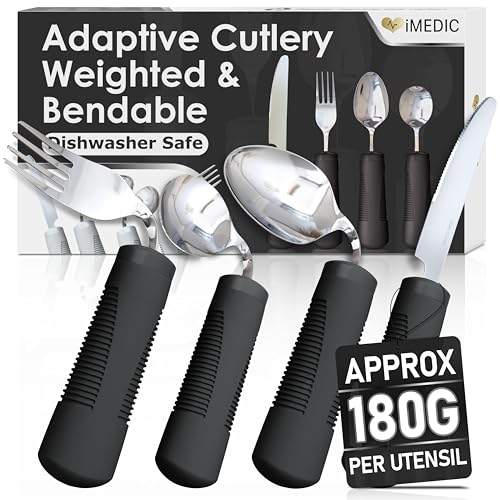
The iMedic Weighted Bendable Cutlery set provides thicker, easier-to-grip handles designed to offer stability for users with Parkinson’s disease or tremors. Each utensil weighs about 180 grams to improve balance and reduce wrist strain, with a flexible section in the forks and spoons to lessen stress on the hands. Note that the knife portion does not bend, but the added weight and grip support contribute to a steadier dining experience overall. These utensils are suitable for on-the-go use and everyday meals alike.
Curved Aidapt Knife For Limited Grip

The Aidapt Curved/Angled Knife is specifically designed for elderly users and those with poor grip or limited wrist movement, including individuals with Parkinson’s disease or arthritis. The handle is chunky and soft, providing a secure, comfortable grasp. The curved design directs food toward the blade and plate in a manner that reduces wrist strain, supporting comfortable, independent dining as needs evolve. This utensil is positioned as a practical everyday aid for improved self-feeding at meals.
Serrated Rocker Knife For Easy Eating

The NRS Healthcare Good Grips Serrated Rocker Knife combines a large cushioned handle with a serrated blade. The latex-free rubber handles minimize slipping, while the stainless steel blade supports controlled slicing with a rocking motion. This design is particularly beneficial for users who experience arthritis or neurological impairments, as it reduces the effort needed for cutting and promotes steadier, safer dining at home or in care environments.
Buying Guide
Key considerations when choosing assisted opening and adaptive cutlery include grip comfort, weight, blade type, and adaptability to various eating styles. For grip comfort, built-up handles and soft materials reduce strain and improve control. Weighted utensils can help stabilize hands for tremors or Parkinson’s, but weight may affect dexterity for some users. Blade designs vary: rocking knives require a different technique than straight blades; angled blades support easier cutting for those with limited wrist movement. Dishwasher safety, material quality, and ease of cleaning are practical factors for daily use. Consider whether one-handed operation, donation-friendly designs, or compatibility with care settings is most important. Finally, ensure the chosen utensils are suitable for the user’s typical meals and preferred dining posture to maximise independence and safety.