Choosing the right drill bit for brick and masonry saves time, reduces dust, and protects surfaces. The following selection focuses on carbide-tipped bits with strong shanks and dust-removal designs to improve accuracy and longevity. Use these tools for brick, concrete, tile, and related materials. The list below highlights five strong options suitable for UK DIY and professional work alike.
| Product | Brand | Key Benefit |
|---|---|---|
| Toolant Concrete Drill Bit Set | toolant | Five carbide-tipped bits for varied brick and concrete drilling |
| HPMAISON Tile Drill Bit Set | HPMAISON | Carbide tipped for ceramic tile, brick, granite and more |
| Camdios Professional Drill Bit Set | Camdios | Industrial strength tile/concrete bits with diverse sizes |
| Qaum 10 Pcs Masonry Bit Set | Qaum | High tungsten carbide bits with sharp spear-point design |
| Draper TCT Masonry Set | Draper | Tungsten carbide tips with reliable durability |
Top Toolant Masonry Bit Set for Brick

The TOOLANT Concrete Drill Bit Set combines five carbide-tipped bits with sizes ranging from 4 mm to 10 mm, designed for drilling concrete, brick, and other masonry materials. The YG8X tungsten carbide tip is engineered for durability and long life, with sharpened side edges to maximise carbide contact and speed up drilling. The set offers a shockproof structure to maintain stability and accurate, smooth results when penetrating masonry surfaces. Ideal for home DIY tasks and professional use where consistent performance is required across varying brick densities.
Key features include:
– Five bits in common masonry sizes (4 mm, 5 mm, 6 mm, 8 mm, 10 mm)
– Tungsten carbide tips for extended life and sharper performance
– Designed for fast drilling into concrete, brick, and similar materials
– Robust construction to resist impact and vibration
Use with compatible hammer drills and apply adequate lubricant or water when drilling particularly hard bricks or concrete to prolong bit life and maintain precision.
Why it suits brick projects
Carbide-tipped bits excel at masonry work due to their hardness and heat resistance. The Toolant set provides flexible sizing to match typical brickwork anchors and fixtures, making it a practical choice for mounting brackets, electrical boxes, or plumbing passes through brick walls.
HPMAISON Tile Drill Bit Range For Masonry

HPMAISON offers a 10-piece tungsten carbide drill bit set suitable for ceramic tile, brick, granite, marble, glass, cement, and wood. The carbide tipped alloy head provides long-lasting hardness, while the U-shaped dust removal slots enhance debris clearance for cleaner, faster drilling. A triangular handle design helps with stability, reducing wobble during operation. Suitable for wet or dry drilling, the bits perform well in hard masonry materials when used with proper lubrication for concrete work.
Key features include:
– Carbide tipped for longevity and sharpness
– U-type slots for efficient dust removal
– Broad compatibility across tile, brick, stone, and glass
– Stable Triangular handle design for steady operation
For brick drilling, start with a smaller size and progress through the sequence to minimise cracking and ensure neat holes suitable for fixtures and anchors.
Why it matters for brickwork
The set’s carbide-tipped composition makes it effective for brick and other dense materials, while its design aids precision and control—helpful when aligning fixtures in brick walls and guiding safety when cutting through tough substrates.
Camdios 5-Piece Tile and Masonry Drill Bit Set

The Camdios 5-piece professional drill bit set is designed for brick, plastic, cement, wood, and tile applications. It features industrial-strength carbide tips and a selection of sizes to accommodate common masonry drilling tasks. The set is described as easy to install and compatible with most standard drills, with a double U-type groove for efficient dust removal and a three-flat shank aiding secure chuck grip. The bits are well-suited for starting holes in hard materials and progressing to larger sizes as needed.
Key attributes include:
– Industrial-strength carbide tips for abrasion resistance
– Range of sizes to cover typical brick and tile tasks
– Double U-slot design for quick debris removal
– Triple-flat shank for firm grip in the chuck
When drilling through brick, proper lubrication and steady technique help to achieve clean edges and reduce wear on the bits over time.
Qaum 10 Pcs Tungsten Carbide Masonry Set
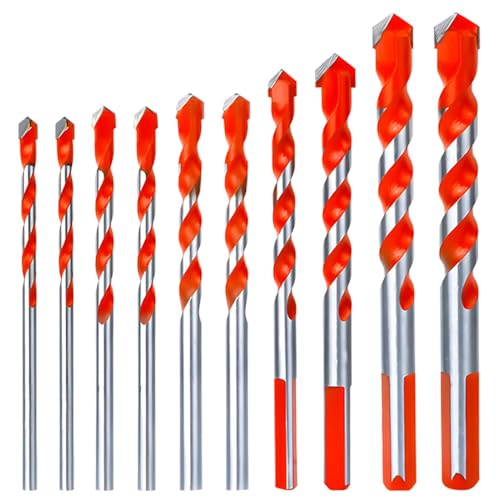
The Qaum 10-piece tungsten carbide masonry drill bit set combines durability with a spear-pointed design to improve initial positioning and hole quality in brick, concrete, ceramic, and other hard materials. The alloy includes high tungsten carbide tips and a stable triangular handle for improved control. The set covers a wide range of hole sizes, enabling users to drill pilot holes and finish with larger diameters without bit changes. Suitable for both professional and DIY tasks, especially where precise brick holes are needed for fixtures or anchors.
Primary benefits include:
– Durable tungsten carbide tips for extended service life
– Sharp spear-pointed design for fast, accurate starts
– Wide size range to cover common brick drilling needs
– Triangular handle design for stable operation
Tip: keep a steady feed rate and avoid excessive pressure to maintain hole quality and prolong bit life in brick and masonry materials.
Draper TCT Masonry 15 Piece Drill Bit Set

Draper’s 15-piece TCT Masonry Drill Bit Set features tungsten carbide tipped bits designed for brick, stone, slate, and other masonry substrates. The bits are engineered for durability and reliability, with professional-grade tips that offer faster, smoother cuts. The set includes well-ground flutes for efficient waste removal and a 130° tip angle to balance penetration with control. This makes it a robust option for repeated brick drilling tasks where consistency matters.
Notable points include:
– Tungsten carbide tips for longer life
– Ground tips with efficient waste removal
– 130° tip angle for balanced performance
– Durable carbon steel construction for reliability
When drilling in brick walls, ensure proper pilot holes and use a masonry hammer drill setting to maximise impact efficiency without overheating the bit.
Buying Guide: Key Considerations For Brick Drilling
Choosing the right masonry drill bit involves balancing material compatibility, durability, and control. Carbide-tipped bits are widely preferred for brick and concrete due to hardness and wear resistance. A few essential considerations:
- Material compatibility: For brick and masonry, carbide tips outperform standard high-carbon steel bits in durability and edge retention.
- Bit geometry: Spear-pointed tips aid initial positioning, while larger diameters require flutes that clear debris effectively.
- Shank and chuck compatibility: Ensure the bit shank matches your drill chuck and that the set includes multiple sizes commonly used for anchors, fasteners, and passthroughs.
- Dust management: U-type or dust-removal slots improve drilling cleanliness and reduce heat buildup, which can shorten bit life.
- Lubrication and cooling: Light lubrication or water can extend bit life when drilling very hard bricks or concrete.
- Drill settings: Use hammer or rotary hammer modes as appropriate, and avoid excessive force that can chip bricks or dull bits.
- Temperature management: Prolong bit life by taking breaks on longer drilling tasks to prevent overheating.
Materials and use cases
For everyday home projects, a 4–6 mm to 8 mm range is typical for anchors and fixtures in brick walls. For larger runs or heavy-duty mounting, larger sizes up to 10–12 mm may be necessary. In professional contexts, pairing carbide-tipped bits with a quality hammer drill and proper cooling yields the best results across varied brick compositions and stone-adjacent materials.
Usage tips
Always start with a pilot hole, maintain steady pressure, and let the bit do the work. For very dense brick, drill in short bursts with pauses to cool the bit. Use the correct drill mode (hammer mode for masonry) and consider a pilot hole to reduce the risk of cracking.