Choosing the right lens for sports photography can dramatically improve sharpness, reach, and decision-making speed on fast-moving action. The following five telephoto and super-telephoto options are well-suited for capturing athletes, wildlife, and rapid movements with clarity and flexibility. This guide compares features, image stabilization, and build quality to help UK photographers select a lens that matches their camera system and shooting style.
| Product | Brand | Focal Range | Key Benefit |
|---|---|---|---|
| Canon RF 100-400mm | Canon | 100-400mm | 5.5-stop IS; versatile telephoto range |
| Sony 55-210mm | Sony | 55-210mm | OSS stabilisation; compact for APS-C |
| Sony 70-350mm | Sony | 70-350mm | Sharp; weather-sealed; versatile reach |
| Lightdow 420-800mm | Lightdow | 420-800mm | Direct RF mount; fixed aperture at range |
| JINTU 420-800mm | JINTU | 420-800mm | Affordable super-tele; adapters included |
Canon 100-400mm Telephoto

The Canon RF 100-400mm F5.6-8 IS USM offers a compact, lightweight telephoto zoom with a broad 100-400mm range. It is designed for wildlife and sport photography, enabling subjects to be framed accurately from a distance. The lens incorporates a 5.5-stop optical image stabiliser to maintain sharpness in dynamic sports scenes and low-light conditions, while advanced optical elements, including UD glass, reduce aberrations for crisper detail. Its versatile reach is well-suited to fast-action moments where distance and flexibility matter.
Sony 55-210mm For APS-C

This Sony E-mount 55-210mm f/4.5-6.3 OSS lens provides a practical telephoto zoom for APS-C cameras, delivering a 55-210mm focal range (82.5-315mm equivalent). Built-in Optical SteadyShot stabilisation helps maintain sharpness during handheld shooting, particularly in outdoor sports scenarios or darker venues. The autofocus system is designed to be quiet and responsive, supporting both stills and video, so action can be captured with minimal distraction and steady framing as subjects move across the frame.
Sony 70-350mm Telephoto Zoom
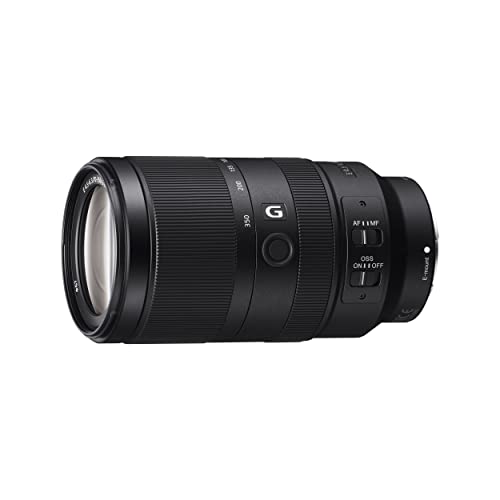
The Sony 70-350mm f/4.5-6.3 G OSS is a flexible telephoto option for APS-C cameras, offering a substantial reach for wildlife and sports photography. The lens design emphasizes sharpness across the zoom range, aided by ED elements that reduce chromatic aberration. A dust and moisture resistant build increases reliability for outdoor events, while Optical SteadyShot stabilisation supports hand-held shooting with longer focal lengths, helping capture crisp action shots and smooth video during dynamic moments.
Lightdow 420-800mm Telephoto

The Lightdow 420-800mm F/8.3 is a dedicated super-telephoto designed for Canon RF-mounted bodies. Its direct RF mount removes the need for adapters, simplifying handling for RF users. The lens provides a massive reach suited to wildlife and distant sports action, with a fixed aperture at each end of the range to help maintain exposure in changing light. Build quality prioritises durability for outdoor photography, though users should anticipate a slower aperture at extreme telephoto lengths and plan for higher ISO in dim conditions.
JINTU 420-800mm Telephoto

The JINTU 420-800mm f/8.3 telephoto is a versatile option for wildlife and sports, offering a dramatic zoom range that brings distant action into close view. This lens is designed for Canon EF/ Nikon F mount DSLR cameras, and the package may include adapters to broaden compatibility. Its multi-layer coating aims to reduce flare and ghosting, delivering clearer images in challenging lighting. The lens is complemented by a tripod ring and case for stable shooting during long telephoto sessions, though manual focus operation requires careful handling at extreme reach.
Buying Guide
- Camera system compatibility: Ensure the lens matches your body (Canon RF, Sony E, etc.) and consider required adapters for older mounts.
- Focal range and reach: For fast action, a versatile zoom like 100-400mm or 70-350mm provides flexibility to frame shots at varying distances.
- Image stabilisation: Optical stabilisation is crucial for handheld sports photography; prioritise lenses with robust IS performance, especially at longer focal lengths.
- Aperture and lighting: Lenses with wider maximum apertures perform better in low light; however, many telephotos used for sports rely on longer reach with stopping down to balance depth of field.
- Build quality and weather sealing: Outdoor stadiums and natural environments require durable, weather-resistant constructions to withstand dust, moisture, and temperature changes.
- Autofocus performance: Fast, reliable autofocus with tracking helps capture decisive moments, particularly with moving athletes or wildlife.
- Weight and balance: Heavier lenses can affect handling; consider body-lens balance, monopods, or tripods for extended shoots.
- Portability vs. reach: Some lenses are compact but offer less reach; evaluate trade-offs against your typical shooting distance and travel needs.
- Budget considerations: Higher-end telephotos deliver crispness and versatility but at a premium; affordable options may still suit amateur or hobbyist needs with careful use.
- Accessory compatibility: Check compatibility with tripod collars, lens hoods, and filters to protect optics and maintain balance during action.