Choosing the right band saw blade can improve cut quality, extend blade life, and reduce downtime. This guide highlights top options available on Amazon UK for general metal, wood, and mixed-material work. Each blade is selected for durability, versatility, and compatibility with common saws. Use the buying guide below to match your machine, material, and project needs to the right blade.
| Product | Length | Teeth | Material | Best For |
|---|---|---|---|---|
| Starrett Carbon Band Saw Blades – 1575 mm Duratec Super FB | 1575 mm | 6 TPI | High carbon steel with flexible back | Contouring and straight cuts in metal, wood, plastics |
| Makita B-40559 Compact Portable Band Saw Blade | 32-7/8″ | 18 TPI | Bi-metal construction | Clean cuts in sheets, tubes, pipes (portable saws) |
| Starrett Carbon Band Saw Blades – 1638 mm Duratec Super FB | 1638 mm | 14 TPI | High carbon steel with flexible back | Versatile cutting for metal, wood, plastics |
| AYAO Ground Tooth Band Saw Blade 1425mm | 1425 mm | 6 TPI | Ground tooth design | Wood cutting, broad compatibility |
| FOXBC 27 Inch Bandsaw Blades 24 TPI | 27″ | 24 TPI | Bi-Metal M42 steel | Portable band saws, fine cuts in metal or plastic |
Starrett 1575 Mm Duratec Blade

Starrett Duratec Super FB blades are designed for flexible back support, enabling stable cutting across a range of materials. The 1575 mm length suits longer cuts in metal, wood, and plastics, while the 6 TPI skip-tooth pattern aids material removal and reduces heat buildup in ferrous and non-ferrous metals. The high-carbon steel construction emphasizes durability and longevity, making these blades a practical, cost-effective option for workshops that handle varying tasks. The welds are designed for robust performance under contour and straight cuts, with a balance between rigidity and flexibility.
Makita Compact 32-7/8″ 18 TPI Blade

This Makita blade uses a durable bi-metal construction to extend life and resist tooth chipping during heavy cutting. An 18 TPI wavy tooth set enhances clean cuts through sheets, tubes, and pipes, helping to minimize tear-out. The blade is designed for portable band saws, making it a practical choice for tradespeople needing reliable performance on-site or in small workshops. The improved weld process contributes to blade longevity, while the tooth pattern supports smoother cuts in a variety of materials.
Starrett 1638 Mm Duratec Blade

The Starrett 1638 mm blade features a 14 TPI regular tooth pattern. Built from high-carbon steel with a flexible back, it balances stiffness for straight cuts with the flexibility needed for contour work. This makes it well-suited to mixed-material applications in workshop settings, including easy-to-machine metals and wood. The Duratec coating (durable alloy back) helps reduce heat buildup and wear, supporting longer blade life under typical cutting tasks.
AYAO Ground Tooth 1425mm Blades

AYAO’s 1425 mm blades are designed for broad compatibility with several popular bandsaw models, including Silverline and Draper ranges. The ground-tooth design aims to deliver smoother cuts in wood and some plastics, with a strong welding point noted for durability. These blades are suited to wood-centric projects and mixed-material cutting tasks, offering a balance between performance and price for hobbyists and small workshops.
FOXBC 27 Inch 24 TPI Blades
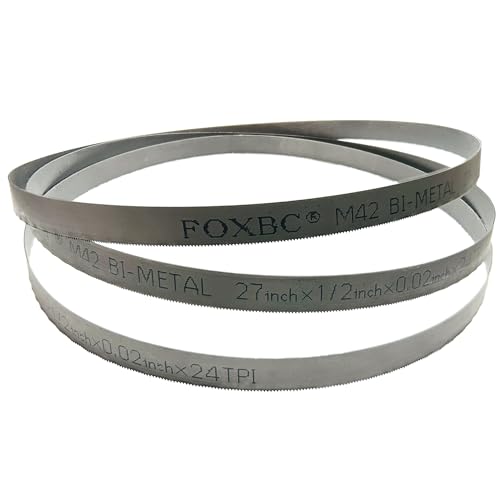
FOXBC offers 27-inch blades with a 24 TPI count for fine, precise cuts in metal or plastic. Built from premium Bi-Metal M42 high-speed steel, these blades are designed to handle heat resistance and welding integrity during demanding cuts. They are compatible with a selection of compact portable band saws, making them a versatile option for tradespeople who require reliable performance on-site. The 0.020″ thickness supports narrow kerf and smoother finishes on thin materials.
Buying Guide
Key considerations when selecting a band saw blade include blade length, tooth geometry, material, and compatibility with your saw. Longer blades are needed for deeper cuts in large joints, while shorter blades excel in tight spaces. Tooth geometry affects finish and speed: higher TPI (teeth per inch) provides a smoother finish but slower cutting, whereas lower TPI can remove material quickly but may leave rougher edges.
Material and construction matter: carbon steel blades with flexible backs offer good general performance and cost benefits, though bi-metal blades with hardened teeth (M42) deliver longer life in ferrous and non-ferrous metals. Heat resistance and weld quality impact blade longevity, especially under continuous operation.
Compatibility is critical. Check blade length, width, and thickness to match your bandsaw’s capacity and the material being cut. Narrow blades provide tighter radii and finer control, while wide blades offer more rigidity for straight cuts. For portable saws, bi-metal blades often deliver robust performance with practical wear resistance.
Welding technique and tooth set influence cut quality. Smoother welds reduce risk of tooth failure, and wavy tooth sets can improve sheet and pipe cuts. For wooden work, blades with lower TPI and wider backs tend to perform better on contouring tasks. Always verify model compatibility with your specific saw model and the types of materials you intend to process.
Environmental and maintenance factors also matter. Proper tensioning, regular cleaning, and avoiding forced cuts help extend blade life. Consider blades with coatings or designs intended to reduce heat buildup and wear during longer runs. In mixed-material shops, stocking a small selection of blades with varying tooth patterns and lengths is prudent to handle diverse tasks efficiently.