Overpronation can lead to lingering foot and leg discomfort, especially during long walks or daily wear. The following selection of orthotic insoles and supportive inserts are designed to realign the foot, reduce excessive inward rolling, and provide day-long comfort. Each option is suitable for walking, running, or standing, and targets common issues like plantar fasciitis, flat feet, and heel pain. The list focuses on 3/4-length arch supports and shock-absorption features to minimize fatigue and improve gait.
| Product | Brand |
|---|---|
| Plantar Fasciitis 3/4 Length Insoles | RooRuns |
| Orthotic Insoles For Plantar Fasciitis & Achilles Tendonitis | gr8ful |
| RooRuns Heavy Duty Arch Support Insoles | RooRuns |
| Trustfeet Over-Pronation Orthotic Insoles | Trustfeet |
| Orthotic Insoles QBK Flat Feet | QBK |
RooRuns 3/4 Arch Insoles
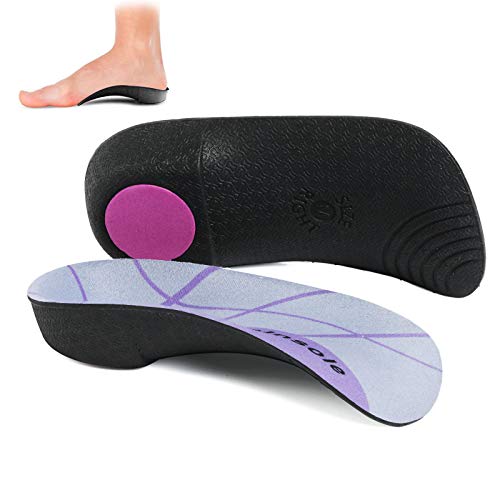
The 3.5 cm high arch supports provide firm, contoured stability for the arch and heel, spreading foot pressure and reducing fatigue. The three-point force design helps prevent collapsed arches, offering stability during varied activities. Crafted from durable EVA foam with skin-friendly velvet fabric, the insoles deliver targeted cushioning and breathability to keep feet comfortable all day. Suitable for walking, running, and sports, they aim to relieve common overpronation symptoms and support long periods of standing.
Gr8ful 3/4 Length Orthotics
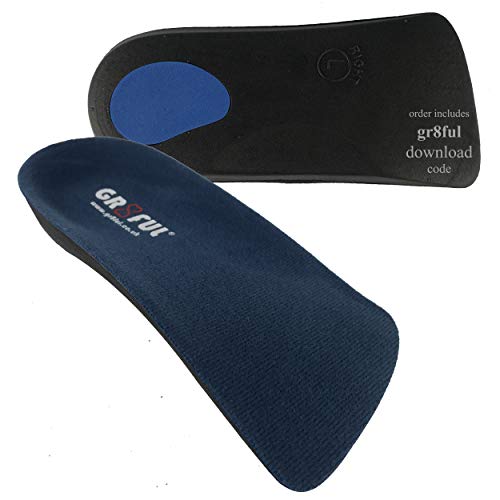
Designed to relieve heel and arch pain associated with plantar fasciitis, flat feet, and Achilles tendonitis, these 3/4 length insoles fit neatly into most trainers and work shoes without crowding the toe box. Lightweight EVA cushioning supports the heel and arch while helping correct over-pronation, reducing knee and lower-back discomfort tied to poor foot alignment. Easy transfer between footwear makes them a versatile option for daily wear, workouts, and commuting.
RooRuns Heavy Duty Arch Support Insoles

Built for higher weight tolerance, these heavy-duty insoles claim support for individuals over 220 pounds. Features include shock-guard technology, a rigid TPU arch insert, and a deep heel cup to stabilise the foot, spine, and joints. The dual-layer PU foam and gel provide all-day cushioning, with a focus on distributing impact and reducing fatigue. They are suitable for standing, walking on hard surfaces, and activities requiring sustained foot support, including those with metatarsalgia or heel spurs.
Trustfeet Over-Pronation Orthotics
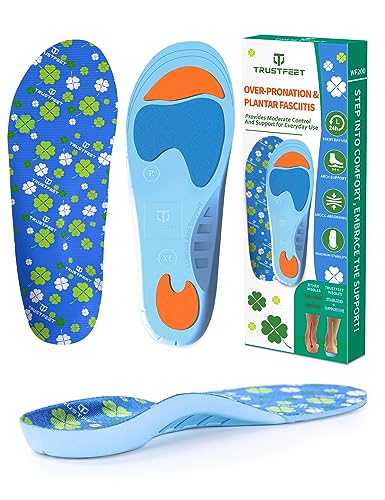
These insoles target excessive internal rotation, providing stability to help correct inward rolling during movement. They relieve plantar fasciitis discomfort by cushioning and aligning the foot and are compatible with a range of shoe types, including athletic, casual, and work footwear. Designed for both women and men, they offer a versatile solution for everyday use, walking, and standing for extended periods.
QBK 3/4 High Arch Insoles

Featuring up to 35 mm high arch support, these insoles absorb impact and distribute pressure evenly across the arch. The 3/4 length design requires no trimming and fits into most shoes, including work boots. They target plantar fasciitis, overpronation, flat feet, and heel pain, with a structured heel cup to maintain proper foot alignment. A velvet feel and PU memory foam offer a soft, breathable underfoot experience, supporting daily wear and activity.
Buying Guide
Key considerations when selecting orthotic insoles for overpronation include arch support height, length, and fit. A 3/4-length design provides targeted arch support without crowding the toe box, making it suitable for a variety of shoes. Look for a deep heel cup to stabilise the rearfoot and materials that balance cushioning with rigidity to control motion. Shock absorption is essential for reducing knee and lower-back strain, especially on hard surfaces.
Fit and comfort are critical; consider your usual footwear type (trainers, work shoes, boots) and whether you need to transfer inserts between pairs. Materials such as EVA foam, TPU, and memory foam contribute to durability and comfort, while breathable fabric helps prevent odors and overheating. Heavier individuals may prefer insoles with higher arch support and rigid structure, whereas lighter users might opt for more flexible options.
Usage scenarios vary: daily walking, running, standing at work, or sports. For persistent foot pain or medical conditions, consult a clinician or podiatrist to confirm suitability and avoid aggravating issues. If you wear orthotics for the first time, gradually increase wear duration to allow your feet to adapt. Consider pairings with supportive footwear that complements the insoles for best results.