Metal players seek high-gain, aggressive tones with tight response and reliable reliability. The following distortion pedals are among the most popular choices in the UK, offering varying levels of gain, EQ shaping, and build quality to suit stage and studio use. This guide examines five strong options, detailing how each pedal handles heavy tones, sustain, and articulation across modern metal styles.
Summary of selected products
| Product | Brand | Key Feature | URL |
|---|---|---|---|
| Behringer UM300 Ultra Metal Distortion | Behringer | Thick, tube-like distortion with midrange control | Link |
| JOYO Metal Distortion Pedal JF-17 | JOYO | 3-band EQ with sweep mid, strong shaping controls | Link |
| Donner Giant Metal Distortion | Donner | 3 Modes with Hi Boost for clearer articulation | Link |
| Fender Hammertone Metal | Fender | Active EQ with internal high-frequency trim | Link |
| STRICH WARCRY Distortion | STRICH | Two distortion modes, vintage to modern crunch | Link |
Behringer Ultra Metal Distortion Pedal
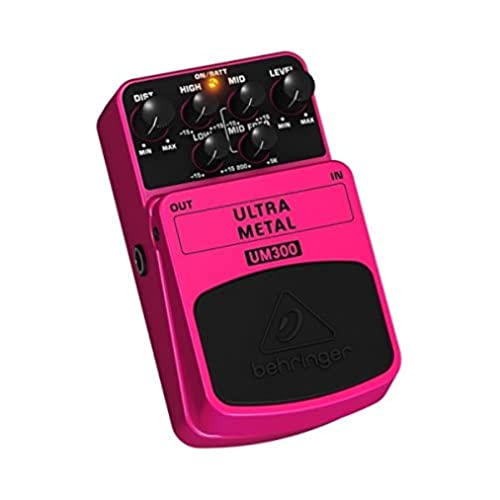
The Behringer UM300 Ultra Metal Distortion offers a thick, tube-like distortion with extended sustain, specifically tailored for hard rock and metal tones. Its three-band approach is complemented by a dedicated mid control, allowing up to 15 dB of boost or cut at 200 Hz–5 kHz. With Distortion, Level, High, and Low controls, players can shape aggressive crunch into smooth lead tones. This flexibility is useful for rhythm sections that need tight, measurable articulation when paired with high-output pickups.
In metal contexts, the ability to precisely sculpt the midrange helps cut through drums and bass without losing bottom end. The simplicity of the control set makes it suitable for beginners seeking metal-appropriate tones while offering enough tonal range for progressive or djent-inspired riffs. Its rugged design supports stage use, though pedalboard space may be a consideration for compact rigs.
JOYO Metal Distortion JF-17 With 3-Band EQ
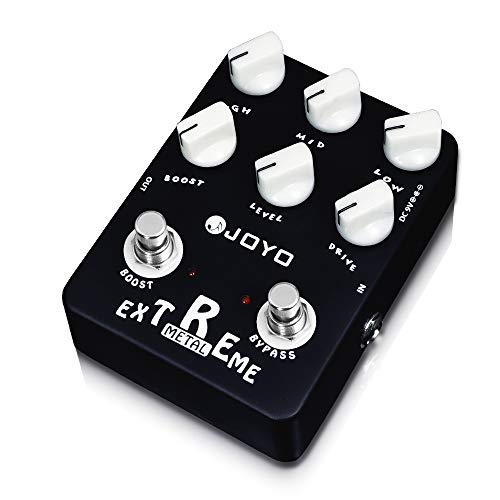
The JOYO JF-17 Distortion Pedal emphasizes flexibility with an adjustable three-band EQ and sweep mid control. Its six control knobs—High, Mid, Low, Boost, Level, and Drive—enable clear shaping of frequency response for metal, rock, and punk tones. The pedal excels when the gain is set high, delivering aggressive metal tones, while lower gains can yield crunchier tones suitable for rhythm work. Independent EQ controls help maintain clarity when using high-output humbuckers or active pickups, ensuring tight, defined notes even in complex riff sections.
Notably, the JF-17 provides dynamic response across gain settings, making it adaptable for both traditional metal rhythms and more modern, high-gain leads. Players can sculpt a tight low end, articulate mids for presence, and retain brightness on extended riffs. Its overall build and control layout are conducive to quick on-the-fly tonal shifts during performances.
Donner Giant Metal Distortion Pedal

The Donner Giant Metal Distortion Pedal brings three modes with a Hi Boost function to enhance high-frequency response, delivering clearer articulation for heavy tones. The pedal’s all-aluminum construction contributes to road durability, with visible indicators to confirm operation. The Hi Boost capability is particularly helpful for intricate techniques such as palm-muted tremolo riffs or tight rhythm chugs where bite and definition matter. This model is attractive for players seeking robust metal tones without sacrificing on-stage reliability.
When using the Hi Boost, expect a more articulate top end that complements modern down-tuned guitars while maintaining a solid, chunky low-end. The switching between modes allows for switchable textures—from fat, saturated distortion to more aggressive, modern metal crunch—making it suitable for live gigs and controlled studio sessions alike.
Fender Hammertone Metal Pedal

The Fender Hammertone Metal Distortion Pedal combines a high-gain metal circuit with an active EQ that provides substantial tonal shaping. TheActive Bass and Treble controls offer up to 15 dB of boost or cut, enabling players to tailor balanced tones across drop tunings or drop tunings with extended sustain. An internal trim-pot further tunes the high-end response, allowing players to tame brightness when using single-coil pickups or brighter amps. The result is a versatile metal core that remains usable across a wide range of guitar configurations.
Fender’s design focus emphasizes low noise and dynamic response, ensuring the pedal stays responsive to picking dynamics while delivering aggressive textures. This makes the Hammertone Metal a solid option for players who want consistent, stage-ready metal tones without sacrificing tonal clarity for delicate passages or clean sections in between riffs.
STRICH WarCry Metal Distortion

STRICH WarCry offers two distortion modes—EXTREME and CLASSIC—tailored for metal and hard rock. This pedal targets players seeking a broad range of metal textures, from vintage crunch to modern, high-gain roar. A key caveat is that it requires a DC 9V power supply (not included) rather than a battery; this supports consistent performance and avoids battery drain during long practice sessions or tours. Volume, Gain, and Tone controls deliver flexible shaping, enabling a spectrum from thick, saturated distortion to tight, aggressive crunch.
Durability is highlighted by a rugged chassis, suitable for gigging players, while the compact footprint ensures it fits on most pedalboards. The dual-mode design provides rapid tonal shifts, which can be advantageous for rhythm sections and lead lines that demand different textures within metal subgenres.
Buying Guide: Key Considerations For Metal Distortion Pedals
- Gain structure and headroom: Metal tones often demand high gain with clear articulation. Look for pedals that maintain note definition as you push the gain higher, especially with humbuckers and extended-range guitars.
- EQ versatility: Pedals with active or multiple-band EQ let you sculpt mids and presence to cut through drums and bass. Mid controls or sweep EQ are particularly valuable for modern metal styles.
- Response to dynamics: A responsive pedal should track picking dynamics—cleaner when picking softly and articulate when picking aggressively. This helps players vary texture without changing guitar volume or amp settings.
- Build quality and reliability: For live use, choose pedals with sturdy enclosures, good jacks, and dependable footswitches. Aluminum chassis or metal casings can endure frequent stomping and transport.
- Power requirements: Some pedals run on 9V DC; others offer battery operation. Confirm power needs and PSU compatibility for your rig to avoid noise or power issues on stage.
- Pedalboard footprint: If space is limited, compare pedal dimensions and consider multi-effect choices that consolidate tone-shaping capabilities without sacrificing metal performance.
- Noise floor and isolation: A high-gain pedal can introduce hiss. Look for designs with noise management features or Shielded components to preserve signal clarity in dense mix contexts.
- Versatility vs. purpose-built tones: Some pedals deliver a broad metal palette (classic to extreme), while others excel in targeted tones (tight rhythm chug, brutal lead). Match your genre focus and guitar setup.
When evaluating these options, consider your guitar’s pickups, amp setup, and playing style. Players using drop tunings or extended-range guitars may prioritise midrange control and high-end articulation, whereas players focusing on precision rhythm may value a strong low-end with tight response. In any case, a pedal with reliable build quality and a flexible EQ section will serve a wide range of metal disciplines, from punk-influenced thrash to downtuned, modern metal textures.