Discover top-performing stud wall detectors designed to locate wood studs, metal beams, wires and pipes behind walls, floors and ceilings. This guide highlights five reliable models, explaining how they work, key features, and what to consider before buying. Whether you’re mounting shelving or wiring a new feature, these tools help you work quickly and safely.
| Product | Brand | Key Benefit |
|---|---|---|
| FOLAI 4 in 1 Stud Finder | FOLAI | Fast, multi-material detection with LCD readout |
| FOLAI TH550 5 in 1 | FOLAI | Multiple modes for metal, wood, cables and more |
| Franklin Sensors ProSensor M150/X990 | Franklin Sensors | High accuracy with nine sensors and live wire detection |
| 8 in 1 Stud Finder Wall Scanner | aquota | Eight-in-one function with built-in level |
| HANMATEK SF1 4 in 1 | HANMATEK | Automatic calibration for quick, accurate scans |
FOLAI 4 In 1 Stud Finder

The FOLAI 4 in 1 Stud Finder Wall Scanner uses advanced sensor technology to locate metal pipes, fire wires, studs, wood framing, rebar and support beams behind walls, floors and ceilings. It offers auto-calibration and an ergonomic grip for comfortable use. The large LCD screen displays the required stud material and precise location, with audible alerts for quick confirmation. Press and hold the scan button for 1–2 seconds to initiate testing. This model supports rapid detection, saving time on everyday tasks.
FOLAI TH550 5 In 1

The TH550 model provides five scanning modes to locate metal pipes, fire lines, studs, wooden frames, steel bars and brackets, plus AC current detection. It supports depths up to 3 inches for pipes and 3 inches for wood and metal components, with a separate AC voltage range for live wires up to 2 inches. Auto-calibration and a comfortable grip optimise reliability and ease of use. Hold the scan button for 1–2 seconds before testing for maximum accuracy.
Franklin Sensors ProSensor M150/X990
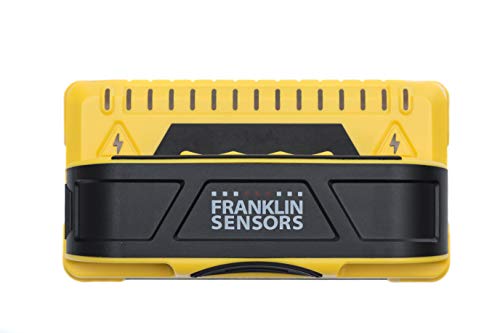
The ProSensor M150/X990 uses nine sensors to maximise accuracy, offering a maximum 1.5-inch detection depth. LEDs track the location of studs, displaying center and edges simultaneously for single or double studs and irregular configurations. It requires no calibration and supports scanning anywhere, even over a stud. It works through drywall and similar surfaces, enabling quick, comprehensive detection across varied wall constructions.
8 In 1 Stud Finder Wall Scanner
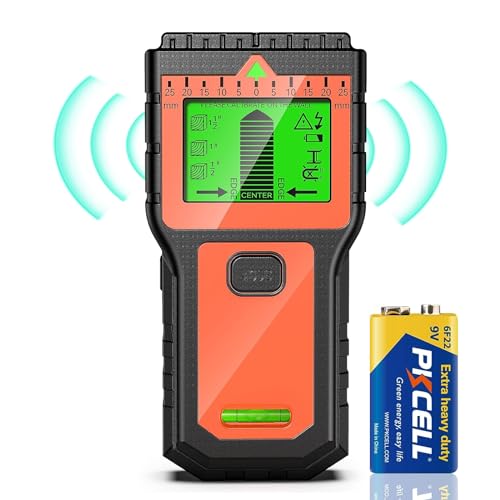
This 8-in-1 wall scanner includes six scanning modes for studs, metal, live wires, plus a bubble level and scale ruler. It combines essential detection functions with a built-in level to improve alignment accuracy. The device benefits from micro-sensor technology to deliver reliable results for projects of varying complexity. It is suitable for DIYers and professionals aiming to reduce errors and save time.
HANMATEK SF1 4 In 1

The SF1 stud finder offers four main functions for detecting metal, wood, magnetism and AC wires, locating nails, screws, steel bars, beams, and cables efficiently. Automatic calibration ensures reliable results. It is designed for quick testing without requiring extensive setup, as long as testing is performed without metals or live wires during calibration, to maximise accuracy.
Buying Guide
Key considerations when choosing a stud wall detector include:
- Detection depth: Depth ranges vary by model and material (wood, metal, pipes). Choose based on the thickness of walls in your typical projects.
- Sensor count and accuracy: More sensors generally improve accuracy and reduce false positives. Look for models advertising multi-sensor arrays or LED targeting.
- Modes and versatility: Multi-mode devices can detect studs, live wires, metal pipes, cables and joists, which is useful for complex installations.
- Calibration: Auto-calibration simplifies use, but ensure you follow recommended testing conditions for accuracy. Some devices require no calibration at all.
- User interface: Large LCDs, audible alerts and intuitive controls help accuracy and confidence during use.
- Ergonomics and accessibility: A comfortable grip and light weight reduce fatigue during extended tasks. Battery life is also a practical factor.
- Surface compatibility: Most detectors work through drywall and plaster; some may be limited on denser materials like concrete.
Choosing between 4-in-1, 5-in-1, and 8-in-1 units depends on your typical tasks. For quick mounting jobs, a 4-in-1 or 5-in-1 model may suffice. For multi-room projects with numerous outlets, wires, or joists, an 8-in-1 tool could provide added value. Always read manufacturer guidance for calibration and testing procedures to ensure reliable results.