Botany researchers and hobbyists rely on precise hand lenses to observe leaf venation, stomata, pollen, and tiny structures on seed capsules. The following selection focuses on portable, reliable magnifiers that perform well for field and desk work, with features such as built-in lights, varied magnification, and durable construction. Each product is suitable for examining plant details, textures, and microstructures without heavy equipment.
| Product | Magnification | Lighting | Notes |
|---|---|---|---|
| 40x | LED + UV | Folding, pocket-friendly | |
| 20x | LED (implied) | Rotating holster, portable | |
| 10x | LED not specified | Foldable, aluminum shell | |
| 40x | LED + UV | Portable, protective case | |
| 30x/60x/90x | LED + UV | Multi-power, versatile |
Below are five hand lens options organized to help you compare magnification ranges, portability, and lighting features for botanical work, from field notes to microscope-level inspection of leaf surfaces, trichomes, and seed structures.
Kingmas Folding Luz Loupe With Lights
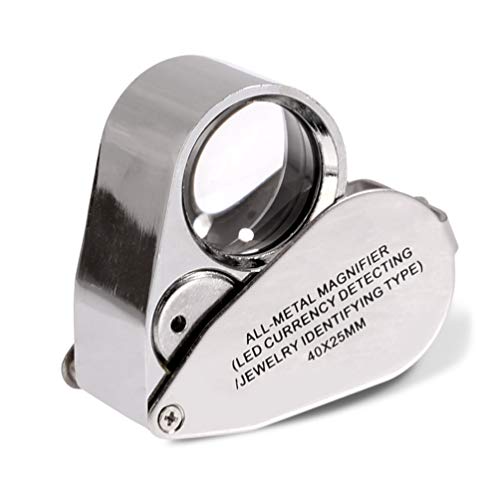
The KINGMAS 40x Jeweller Loupe is a compact, pocket-sized option ideal for field botanists who need a high magnification. The dual LED light source helps illuminate leaf surfaces, pollen grains, and tiny venation patterns even in shaded areas. UV light aids counterfeit detection of papers and certain pigments, but in botany it can also help distinguish surface coatings or mineral inclusions on plant samples. The folding design makes it easy to store and carry, while the included batteries ensure immediate use. For plant taxonomy tasks, this loupe offers a close-up view of fine features, such as glandular hairs and epidermal textures.
Key features include a sturdy construction and a clear 40x view, which is suitable for inspecting trichomes, stomata patterns on underside of leaves, and micro-textures on seeds and fruits. Users should note that depth of field at higher magnifications is limited; stable hands or a resting surface improves focus. The included LED and UV functions add versatility for lighting in the field and light-based material checks. Overall, this model balances portability with high magnification for detailed plant study.
20X Pocket Magnifier With Rotating Cover

The Uncle Paul 20X Pocket Magnifier is a compact, lightweight option designed for quick field checks of plant features such as small seeds, leaf margins, and petal structures. At 20x magnification, it provides a crisp close-up view while remaining easy to handle. The rotating protective holster and 7.2 x 5.3 cm footprint make it practical for tucking into a pocket or notebook. The design emphasizes portability without sacrificing essential magnification, making it a reliable everyday tool for botanists who need to annotate or compare small plant parts on-site.
Important considerations include the balance between magnification and depth of field; at 20x, slight tremor can affect composition. The durable and lightweight design supports frequent handling in outdoor environments, allowing you to compare leaf hairs, minute stippling, or tiny features on a specimen card. For classroom or fieldwork, this magnifier provides a dependable middle-ground between high-detail views and portability.
HDXH 20X Pocket Magnifier

The HDXH 20X Pocket Magnifier focuses on compact utility with a 50 mm lens diameter for a crisp, close-up view of plant details. Its pocket-friendly size—7.2 x 5.5 cm and about 32 grams—supports field and classroom use without added bulk. The 360-degree rotating protective holster allows for adjustable angles, enabling comfortable observation of leaf surfaces, trichomes, and small plant structures. The artificial leather cover protects the lens during transport, preserving clarity for repeated field use.
Notes for botany use include ensuring a stable stance while inspecting delicate features under 20x magnification; this model is well suited to quick checks, pairing well with a notebook or portable sample tray. It offers a reliable combination of portability, protection, and magnification for practical plant observations in diverse settings.
CuntaUk 10X Jewelers Loupe

The CUNTAUK 10X Jewellers Loupe is a foldable, pocket-friendly option built with an aluminium alloy shell and optical glass for a compact yet sturdy design. With 10x magnification, this loupe is especially useful for examining leaf outlines, pollen grains, and minute seed details without overwhelming depth of field. The case and foldable form help protect the lens during transport, making it suitable for fieldwork and classroom demonstrations where quick, repeated inspections are needed. The product’s light construction aids carrying in pockets or small bags, which is advantageous for botanists moving between study sites.
For botanists focusing on basic leaf anatomy and small-scale seed features, this model provides a reliable baseline magnifier that is easy to deploy. It complements higher-magnification tools when a broader view is necessary, and its robust build ensures longevity under regular handling in field environments.
40X Metal Pocket Magnifier With Lights

The 40X Metal Pocket Magnifier from Uncle Paul pairs high magnification with practical illumination and UV features. The two LED lights and UV light improve visibility in dim environments or to verify surface details and coatings on leaf surfaces and seed structures. The compact metal body ensures durability for field use, while the foldable design protects the lens when not in use. This option suits botanists who require a detailed look at small features, including trichome patterns, cuticle textures, and currency or pigment-like features that may resemble plant surface coatings under UV light.
Botany tasks at this level may include inspecting hairs, stomata patterns on the epidermis, or fine cell textures on petals and seed coats. The combination of LED and UV lighting offers flexibility across varied ambient conditions, making it a strong choice for field notes and specimen checks where higher magnification is needed without resorting to more complex equipment.
Pull-out Pocket Magnifier With 30X/60X/90X

This pull-out magnifier offers three magnification levels—30x, 60x, and 90x—making it highly adaptable for botany work. The illuminated LED lights and UV light provide consistent lighting for low-light environments and for features that react under UV illumination. The compact, portable design suits field surveys, herbarium work, and classroom demonstrations where varying degrees of magnification are needed without switching devices. The model’s ergonomic handling and battery-powered operation support extended use in diverse settings, from field walks to lab prep on a bench.
When selecting a magnifier for botany, consider the trade-offs between magnification and depth of field, lighting options, and how you intend to use the lens in the field. Higher magnifications reveal finer details like stomata and trichomes, but require steadier hands or a stand. Lower magnifications offer broader context, aiding in specimen orientation and measurement. Portable models with protective holsters or cases reduce the risk of damage during transport, while models with UV or specialized lighting help reveal surface features or material authenticity in some plant-related contexts.
Buying Guide
- Magnification range: For plant anatomy, 10x–40x covers most leaf surfaces, trichomes, and small seeds. A model with multiple levels (30x/60x/90x) can cover more tasks but may be harder to hold steady at high power.
- Lighting: LED lighting is essential for dim field conditions. UV light can help reveal surface details, coatings, or imperfections on certain plant materials, though its botanical utility is situational.
- Portability and protection: Foldable designs and protective cases preserve lenses during transport. Pocket-sized options are convenient for fieldwork, while larger lenses may offer steadier viewing on a desk.
- Build material: Aluminum or zinc alloy housings provide durability. Optical glass lenses ensure clearer images, reducing distortion when examining fine features.
- Usability in the field: Look for lightweight optics with short eye relief and comfortable grip if you’ll be using the loupe for extended periods outdoors or in classroom settings.
- Complementary tools: A high-midelity lens can pair with sample slides, herbarium sheets, or field notes. Consider combining a high-magnification loupe with a broader-field loupe for a complete toolkit.
In summary, the best hand lens for botany balances magnification, portability, and reliable lighting. The selections above provide a spectrum from high-detail field inspection to ready-to-use classroom tools. Depending on your focus—leaf microstructures, pollen examination, or seed coat textures—select a model that aligns with your typical observation distance and preferred lighting setup.