For keen cyclists, accurate speed and cadence data enhances training, pacing, and performance. The right sensor pair integrates quickly with your bike computer or app, supports multiple protocols, and remains reliable in all weather. Below, five top options are evaluated for real-time data, connectivity, ease of use, and compatibility with popular platforms like Zwift, Peloton, and Wahoo. The selections cover Bluetooth and ANT+ support, IP ratings for weather resistance, and battery longevity to suit long rides and indoor sessions alike.
Summary of chosen products:
| Product | Brand | Key Features |
|---|---|---|
| Garmin Bundle | Garmin | ANT+/BLE compatibility, separate speed and cadence sensors |
| COOSPO BK9 Cadence & Speed Sensor | COOSPO | ANT+/Bluetooth 5.0, IP67, magnet-free mounting |
| COOSPO BK467 Dual Sensor | COOSPO | Two sensors in one package, switchable mode |
| Magene S3+ | Magene | Bluetooth/ANT+, user instructions on single-mode use |
| moofit CS8 Kit | moofit | Cadence or speed option, IP67, Bluetooth & ANT+ |
The following detailed reviews cover installation, data reliability, and ecosystem compatibility to help you choose the best sensor setup for your riding style and devices.
Garmin Bundle For Speed And Cadence

The Garmin Bundle combines a dedicated speed sensor with a cadence sensor, delivering wireless data through ANT+ and Bluetooth Low Energy. This setup is designed to work seamlessly with Garmin bike computers and compatible third-party apps. ANT+ support allows simultaneous connections to multiple devices, which is useful for dashboards and training apps. The bundle concentrates on reliability and broad compatibility, a strong choice for riders relying on Garmin ecosystems or multiple training platforms.
COOSPO BK9 Cadence & Speed Sensor

The BK9 model from COOSPO offers both cadence and speed data with dual-band ANT+ and Bluetooth 5.0, enabling easy pairing with cycling apps, trainers, and bike computers. Its magnet-free design simplifies installation on a wide range of frames, with the cadence sensor attaching to the crank arm and the speed sensor to the wheel hub. IP67 weather resistance ensures durability during rain or wet training sessions. This sensor is a practical, versatile option for riders seeking broad device compatibility and straightforward setup.
COOSPO BK467 Dual Sensor Kit

The BK467 package includes both a speed sensor and a cadence sensor, enabling you to track two metrics concurrently. It uses both Bluetooth and ANT+ so you can connect to multiple devices depending on your training setup. Notably, the two sensors operate in distinct modes—cadence on the crank sensor and speed on the wheel hub sensor—so users must manage mode selection per sensor. This configuration works well for riders who prefer dedicated sensors for separate data streams and app compatibility with Zwift or Peloton.
COOSPO Speed And Cadence Separate Sensors

This COOSPO option provides two sensors in one package, with a simple switch between cadence and speed modes. The dual-sensor approach supports concurrent data capture, beneficial for cyclists who want both metrics simultaneously across compatible devices. While one mode can be used at a time, the ability to monitor both speed and cadence with two devices or apps makes it suitable for advanced analytic setups and multi-App training strategies.
Magene S3+ Cadence/Speed Sensor

Magene’s S3+ supports both Bluetooth and ANT+ with a single sensor design, offering flexible connectivity for Android and iPhone devices as well as bike computers. The device is designed to be user-friendly, with guidelines indicating mode selection and setup considerations when operating over Bluetooth (one app or device at a time) and over ANT+ (multi-device connections). This model is ideal for riders who want a compact, dual-mode sensor with broad compatibility and straightforward pairing processes.
Moofit CS8 Cadence Speed Sensor Kit

Moofit offers an IP67-rated kit that can function as a cadence sensor, a speed sensor, or a dual-sensor setup depending on your purchase choice. The BLE and ANT+ compatibility enables versatile pairing with bike computers and training apps. The kit is designed for real-time data monitoring and helps riders capture cadence or speed data with good battery efficiency. The product line emphasizes practical performance for those needing reliable metrics across both outdoor and indoor cycling contexts.
Moofit CS8 Single Speed Sensor
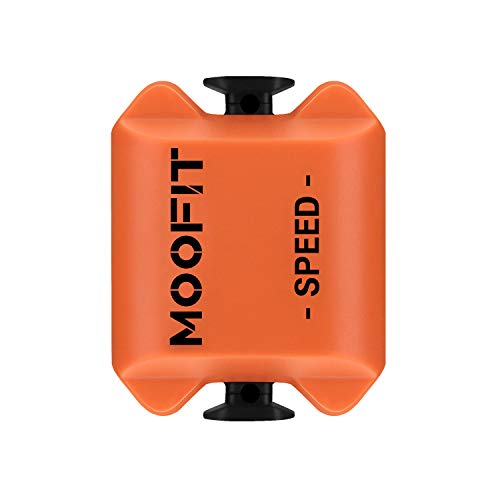
This Moofit option focuses on speed data with a dedicated sensor, suitable for riders who want a single-purpose device optimized for speed tracking. It maintains Bluetooth and ANT+ support and emphasizes real-time data with compatibility to a range of training apps. It is an attractive choice for riders prioritising speed metrics while using separate devices or platforms for cadence data.
Buying Guide: Key Purchase Considerations And Comparisons
Choosing the right speed and cadence sensor involves weighing data accuracy, compatibility, and installation simplicity. Consider the following dimensions to find the best fit for your setup:
- Connectivity: If you rely on multiple apps or devices, prefer ANT+ with Bluetooth dual-band support to maximize compatibility and reduce data conflicts.
- Sensor configuration: Decide between single-sensor units (one mode at a time) and dual-sensor kits (data for speed and cadence concurrently). Dual-sensor options often provide greater flexibility for multi-device training.
- Mounting compatibility: Magnet-free designs reduce installation time and frame compatibility issues. Check whether the crank-arm or wheel-hub mounting suits your bike frame.
- Weather resilience: IP67 or higher ratings are advantageous for rides in rain or muddy conditions, and for training indoors where humidity is a factor.
- App and platform support: Ensure compatibility with your preferred platforms (Zwift, Peloton, Wahoo, OpenRider, Rouvy, etc.). Some vendors emphasise Garmin or third-party app ecosystems.
Performance considerations include data latency, battery life, and whether the sensor can store data when a phone is not in range. If you ride with complex trainer setups or run multiple devices, devices supporting simultaneous connections via ANT+ can simplify your workflow. Some models require you to pair sensors within specific apps, so follow manufacturer pairing instructions to avoid connection conflicts. Finally, confirm whether you need cadence, speed, or both, as this will influence whether you buy one sensor with dual capability or a two-sensor package.