The right band saw blade can dramatically improve cutting quality, blade life, and efficiency when working with metal. This guide highlights five top-performing blades available to UK buyers, drawn from well-known brands and designed for metal cutting in home workshops, professional garages, and industrial spaces. Each product section explains what makes the blade suitable for metal, including tooth geometry, blade material, and compatibility with portable or stationary band saws. Use the buying guide to compare options based on material type, thickness, and cutting tasks.
| Product | Length | Teeth | Best For |
|---|---|---|---|
| Makita B-40559 Compact Portable Band Saw Blade | 32-7/8 in | 18 TPI | Sheets, tubes, pipes |
| Starrett Duratec Super FB 1575 mm | 1575 mm | 6 TPI | Contour and straight cuts in metal, wood, plastics |
| Starrett Duratec Super FB 1638 mm | 1638 mm | 14 TPI | Versatile metal and wood cutting |
| Milwaukee 30-9/16″ 12/14 TPI | 30-9/16 in | 12/14 TPI | Extreme metals, fast cutting |
| FOXBC 27 Inch 24 TPI | 27 in | 24 TPI | Portable band saws, thin metals |
Makita Compact Blade For Metal

Makita’s B-40559 blade is designed for portable band saws used in metal cutting tasks. The blade uses a durable bi-metal construction, offering longer life in metal cutting applications compared with standard carbon blades. Its 18-teeth-per-inch (TPI) wavy tooth set supports clean cuts in sheets, tubes, and pipes, reducing burrs and improving edge quality. The improved welding process further enhances blade life by reducing fatigue and chipping at the weld joint, making it suitable for frequent cuts in light gauge metals and mixed-material workpieces.
Starrett 1575 Mm Duratec Blade

Starrett’s 1575 mm Duratec Super FB blade is a versatile choice for contour and straight cuts across metals, wood, and plastics. Built from high-carbon steel with a flexible back, it offers durability and longevity for extended use in demanding environments. The 6 TPI skip-teeth design provides aggressive material removal on ferrous and non-ferrous metals, while the welded construction ensures blade integrity on longer cuts. This blade is economical for workshop use and suits metalworking tasks that require robust, steady performance with less frequent blade changes.
Starrett 1638 Mm Duratec Blade

This Starrett 1638 mm Duratec Super FB blade offers a 14 TPI regular tooth configuration, providing smoother finishes on metal and wood alike. The long blade length is suitable for deeper cuts and resawing tasks, while the high-carbon steel, flexible back design helps resist fatigue and maintains blade tension. It is an excellent option for users needing reliable performance on a variety of materials and thicknesses, including medium-hard metals and plastics, with a focus on clean, accurate cuts and consistent results.
Milwaukee Compact Thick-Metal Blade

Milwaukee’s 30-9/16″ blade pack is designed for compact band saws that tackle thick metals. The 12/14 TPI configuration enables fast material removal in stainless steel and other extreme metals, with claims of up to three times blade life in stainless steel and similar alloys. The design focuses on reducing blade changes and improving productivity by delivering more cuts per blade through efficient heat management and robust steel construction. Portable-use blades like these are ideal when mobility is essential in cutting heavier metal sections.
FOXBC 27 Inch 24 TPI Blades
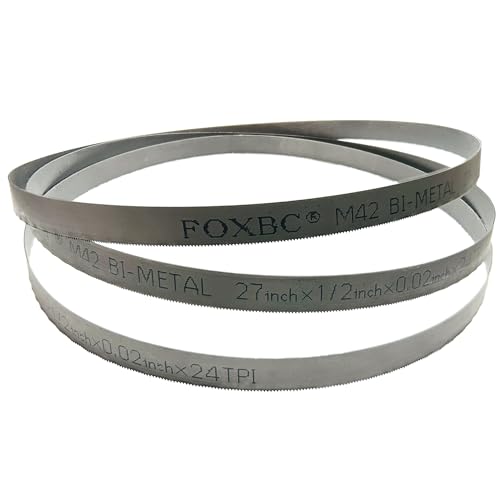
FOXBC offers a 27-inch, 24 TPI portable blade designed for DeWalt and Milwaukee portable band saws, among others. The 0.020″ thickness and 1/2″ width give a balance of rigidity and flexibility, suitable for precise cutting of thin metal sections and complex profiles. Constructed from premium bi-metal M42 high-speed steel, these blades feature heat resistance and strong weld integrity to withstand extended cutting sessions. The 24 TPI helps achieve cleaner, finer cuts with less post-processing.
Buying Guide
Key considerations when selecting metal band saw blades include blade material, tooth geometry, and compatibility with your equipment. Bi-metal blades combine a tough steel back with a hardened tooth edge for longevity, while high-carbon steel blades offer economical performance for light to medium-duty work. Tooth geometry matters: lower TPI (e.g., 6 TPI) handles thicker metal and faster material removal; higher TPI (e.g., 14–24 TPI) delivers finer finishes on thinner sections. Length compatibility is essential for your saw’s throat and guide system; longer blades are needed for deep cuts or resawing, while shorter blades suit portable tools. For ferrous and non-ferrous metals, ensure the blade backs are flexible enough to reduce chatter and vibration. Weld integrity is another factor; stronger welds prevent joint failure under heavy cutting. When cutting metal sheets, tubes, or pipes, consider blades with a wavy tooth set or regular tooth pattern that aligns with your material type to minimize burrs. Also weigh cost-per-cut; blades with longer life may offer better value in high-volume shops. Finally, check manufacturer recommendations for your specific bandsaw model to avoid compatibility issues and guarantee optimal performance.
In summary, your choice depends on the task: for portable cutting of metal sections and tubes, prefer blades like Makita’s 18 TPI and FOXBC’s 24 TPI options designed for mobility and precision. For contour work or longer jobs, Starrett’s longer Duratec blades provide balance between rigidity and life, while Milwaukee’s packs emphasize longevity in extreme metals. Use the buying guide to align blade features with your typical metals, thicknesses, and workflow requirements to achieve consistent, accurate results.