Finding the right hiking boots for mountain terrain means balancing waterproofing, grip, support and comfort. The following selections cover Gore-Tex and IsoDry technologies, rugged outsoles, and sturdy uppers to handle wet rocks, mud and cold. Use this guide to compare five standout UK-friendly boots for varied climbs and seasons.
| Product | Key Feature | Ideal Use |
|---|---|---|
| Berghaus Hillmaster II Gore-Tex | Breathable waterproof membrane, memory foam, Vibram sole | All-weather mountain treks |
| Salewa Mountain Trainer Mid Gore-TEX | GORE-TEX lining, 3F lacing system, Flex Collar | Alpine routes and long descents |
| Mountain Warehouse Makalu Extreme | IsoDry waterproof, Thinsulate warmth, rugged Nubuck | Cold or mixed conditions |
| Mountain Warehouse Adventurer Womens Printed | IsoDry waterproof, reinforced heel/toe, lightweight upper | Spring–summer hikes and outdoors |
| Mountain Warehouse Iceberg Extreme | IceLock outsole, Thinsulate lining | Winter trekking and icy surfaces |
Berghaus Hillmaster II Gore-Tex

High-performance trekking boot designed for wet and challenging terrain. The Barr is built with a breathable GORE-TEX performance comfort membrane to keep feet dry while allowing moisture to escape. An improved tongue and collar pattern with memory foam adapts to foot shape, enhancing overall comfort on long hikes. The Vibram outsole offers dependable grip on wet rocks and mud, supporting stability across uneven mountain paths. Suitable for extended days in mixed weather conditions.
Salewa Mountain Trainer Mid Gore-TEX

Lightweight trekking boots with robust suede and a GORE-TEX lining for alpine tours and wet conditions. The 3F System integrates lacing, sole and heel for an optimal fit, while Flex Collar increases ankle movement on fast descents. The design prioritises support without excessive weight, making them suitable for long hikes where comfort and foot protection matter.
Mountain Warehouse Makalu Extreme
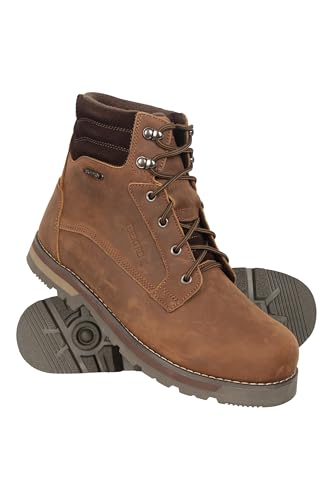
Extremely capable leather boots designed for serious outdoor use. IsoDry provides waterproofing while IsoDry keeps feet dry during changes in weather. The Isotherm lining retains warmth in low temperatures without adding weight. A phylon midsole offers cushioning to reduce fatigue on rocky trails, making these boots suitable for longer expeditions in cooler conditions.
Mountain Warehouse Adventurer Womens Printed

Women-specific hiking boots with IsoDry waterproofing and a synthetic upper, combined with a mesh lining for breathability. Heel and toe bumpers reinforce high-wear areas, extending boot life on rough terrain. These features support comfortable day hikes in spring and summer, when foot movement and moisture management are critical on diverse trails.
Mountain Warehouse Iceberg Extreme

Winter-focused boots featuring an IceLock outsole for superior traction on icy and wet surfaces. Thinsulate lining adds warmth without bulk, while the IsoDry system keeps feet dry in slush and rain. This model targets hikers who face cold, slippery conditions and require reliable grip across frozen ground.
Buying Guide
When selecting mountain hiking boots, consider terrain, climate, and fit. Key factors include waterproofing technology (GORE-TEX, IsoDry) to manage moisture; outsole design for grip on mud or ice; and upper materials (leather, suede, or synthetic) for durability and weight. For long ascents, a supportive midsole and anatomical ankle support reduce fatigue. If plan includes winter routes, look for insulation like Thinsulate and a lug pattern suited to icy surfaces. For women, footwear with shape-fit features and tailored padding can improve comfort on prolonged treks. Always try boots with the socks you intend to wear on hikes to ensure proper sizing and reduced rubbing. Compare weight, breathability, and the boot’s ability to shed moisture during multi-day expeditions to choose the best option for your typical routes.
Consider these perspectives for a balanced choice:
- All-weather performance: Gore-Tex or IsoDry membranes provide reliable waterproofing while maintaining breathability.
- Temperature and insulation: Thinsulate or similar lining adds warmth in cold months without excessive weight.
- Grip and stability: Outsole rigidity, tread pattern and Vibram-style compounds affect grip on wet rocks and mud.
- Durability vs. weight: Leather uppers tend to be more durable but heavier; synthetic uppers are lighter and often quicker drying.
- Fit and comfort: A secure heel, padded collar, and a snug midfoot prevent blisters on long days.
For buying decisions, match boots to the most common conditions you expect on UK trails—rain, mud, and variable temperatures. If you frequently encounter icy mornings, prioritise models with solid ice traction. For long spring and summer routes, breathability and lighter weight can trump extra insulation. Always verify sizing with the retailer’s UK sizing chart and check return policies in case a boot requires a different size or width.