Finding the right stud extractor can save hours of labour when dealing with seized or broken studs in engines, manifolds, or industrial gear. This guide reviews five reliable options available in the UK, outlining their key features, build quality, and suitability for common stud sizes from 6 mm to 19 mm. Whether you’re a professional mechanic or a DIY enthusiast, selecting the right tool helps protect threads and ensures a safe, efficient extraction process.
| Product | Brand | Stud Range | |
|---|---|---|---|
| Spurtar Stud Remover 6 mm to 19 mm | Spurtar | 6–19 mm | |
| Damaged Screw Extractor (Set of 6) | Ryster | Various screws and bolts | HSS, six-piece set for versatility |
| Blue Spot Tools 3/8″ Impact Stud Extractor | Blue Spot Tools | 6–12 mm | Carbon steel with hardened jaws |
| Flaconi Stud Remover | Flaconi | 6–19 mm | Two-hole design for best fit |
| Tissting Stud Extractor | Tissting | 6–12 mm | Heat-treated alloy steel |
Spurtar Stud Remover Review
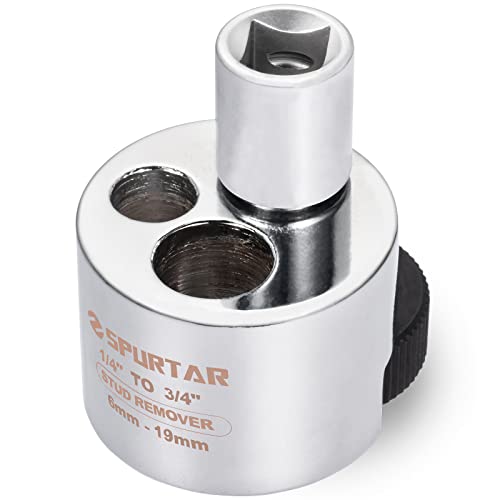
The Spurtar Stud Remover covers a range from 6 mm to 19 mm and uses a 1/2 inch drive to extract studs. It is described as a heavy-duty tool designed for engines, exhaust manifolds, and cylinder heads. The knurled roller engages the stud through a cam action, enabling a firm grip while minimizing thread damage. The cam mechanism allows quick operation, making it suitable for quickly out bolt extractor tasks. The tool is positioned as a professional-grade option, but suitable for occasional use as well, with two fixing holes sized 1/2″ and 3/4″ to optimise fit and reduce thread damage. This model is compatible with common automotive applications and offers a straightforward extraction experience when used correctly.
Features to note include its wide stud range, the cam action gripping method, and safety design for both professional and hobby use. Users should ensure the tool engages the stud fully before applying torque and avoid over-torquing to protect threads. The product’s robust construction is aimed at delivering reliable performance across common automotive tasks, from head gaskets to exhaust studs. For best results, pair with appropriate lubricants and ensure clean mating surfaces to maximise grip and reduce the risk of further damage.
Ryster Damaged Screw Extractor Set

The Ryster six-piece screw extractor set is designed to remove stripped and rusted screws and bolts. The set includes multiple extractor heads ranging from #0 to #4, with the option to include common sizes for quick access. The extractors are manufactured from High Speed Steel (HSS), a material preferred for its durability and ability to maintain hardness under torque. The set is marketed as effective against damaged fasteners, including painted-over or rounded heads. The high-speed steel construction and varied heads help users tackle a wide range of stuck hardware tasks, from automotive to household applications, while the precision threading aids easy alignment and action when turning to remove the fastener.
Practical considerations include ensuring the correct extractor size is chosen for the bolt or screw, applying cutting oil or lubricant to reduce friction, and turning steadily in reverse to coax the fastener free. The design aims to minimise further damage to surrounding material, and the included heads offer broad compatibility for common hardware sizes encountered in UK workshops and garages.
Blue Spot Tools 3/8″ Impact Stud Extractor

The Blue Spot 3/8″ Impact Stud Extractor is built from carbon steel, with jaws in heat-treated chrome molybdenum. Chrome molybdenum is chosen for its high tensile strength and durability, particularly suited to demanding applications. The extractor is designed to remove broken, stripped, and rusted studs, as well as threaded rods and broken bolt shanks. It features an adjustable fit to accommodate studs from 6–12 mm (1/4″ to 1/2″). The combination of robust materials and an adjustable grip makes it a practical choice for professional use in automotive repair or maintenance workshops, where reliability under impact loading matters. For optimal results, ensure proper alignment and steady application of torque to avoid jaw deformation.
Flaconi Stud Remover Tool

The Flaconi Stud Remover is designed for 6–19 mm studs and features a high-quality build with carbon steel spindle and chrome-molybdenum gears. The tool provides two key fit options at 14 mm (1/2 inch) and 19 mm (3/4 inch), allowing precise engagement with the stud. The round bolt extractor design enables the tool to sit flush with the mounting surface, which helps it grip studs that break very close to the surface. Its durable construction and ergonomic design aim to reduce the risk of thread damage while enhancing grip. Users should apply steady torque and consider lubrication to improve efficiency and longevity of the tool in repeated use scenarios.
Tissting Stud Extractor Review

The Tissting Stud Extractor is built for 1/4″–1/2″ (6–12 mm) rounded studs and offers a heat-treated alloy steel construction with a chrome-plated surface for rust resistance. It uses a bottom hex flat nut to tighten the jaws, enabling secure grasp and controlled extraction by turning counterclockwise. The tool is designed to withstand high torque and protect surrounding components from damage during removal processes. The included design emphasizes reliability in moderate-to-heavy-duty scenarios, such as exhaust system work or engine block maintenance, where studs are prone to corrosion or deformation. Lubrication can aid movement and extend tool life.
Saipor Damaged Bolt and Stud Extractor

The Saipor Damaged Bolt and Stud Extractor is designed to fit 1/4″ to 1/2″ (6–12 mm) studs, offering a universal approach to damaged, rounded, or painted-over fasteners. Made from heat-treated alloy steel with a chrome finish for rust resistance, the knurled surface provides a secure grip during operation. The tool emphasizes access to tight spaces where traditional tools struggle, enabling practical removal in compact automotive or industrial configurations. The design supports consistent jaw pressure and controlled turning to prevent further damage to the surrounding area.
GIONAR Stud Extractor Set

The GIONAR stud extractor set is tailored for 1/4″–1/2″ (6–12 mm) bolts and rounded studs, using a patented jaw mechanism that tightens progressively as you turn. The heat-treated alloy steel construction provides robust torque resistance, suitable for rusted and rounded studs. The reverse-thread design facilitates removing broken screws without damaging surrounding components, and the chrome-plated exterior helps resist corrosion. A compact 4.3″ body fits in confined spaces, while a hex-flat nut base allows additional leverage. The kit’s design targets automotive and light industrial tasks where reliability under torque is essential.
Buying Guide: Stud Extractor Essentials
Key considerations when choosing a stud extractor:
- Stud size range: Confirm the extractor covers your common sizes, typically 6–12 mm or 6–19 mm for automotive work.
- Jaw mechanism: Look for cam or reverse-thread designs that tighten securely without damaging threads.
- Material and durability: Heat-treated alloy steel and chrome finishes offer higher torque resistance and corrosion protection.
- Drive and leverage: Ensure the tool’s drive fits your equipment (e.g., 1/2″ drive) and that there is a method to apply leverage in tight spaces.
- Two-hole or dual-fit features: Some designs provide two-hole options to optimise fit and reduce thread damage near mounting surfaces.
- Access to tight spaces: Tools with compact bodies excel in engine bays and near exhaust components.
- Lubrication compatibility: Able to accommodate lubricants to reduce wear and improve grip over repeated use.
When selecting a kit or individual tool, consider your typical projects, personal experience with extraction torque, and the likelihood of encountering seized, rusted, or painted-over studs. For best results, pair the extractor with compatible lubricants, a properly sized wrench or ratchet, and a stable work environment to maintain control of torque and movement. Always inspect the surrounding threads after extraction and clean any debris to maintain future reliability.